The Popcorn Isn't Real (Moana)
Moana dies in the storm. The rest is the spirit world.
She begs the ocean for help. It answers by killing her.
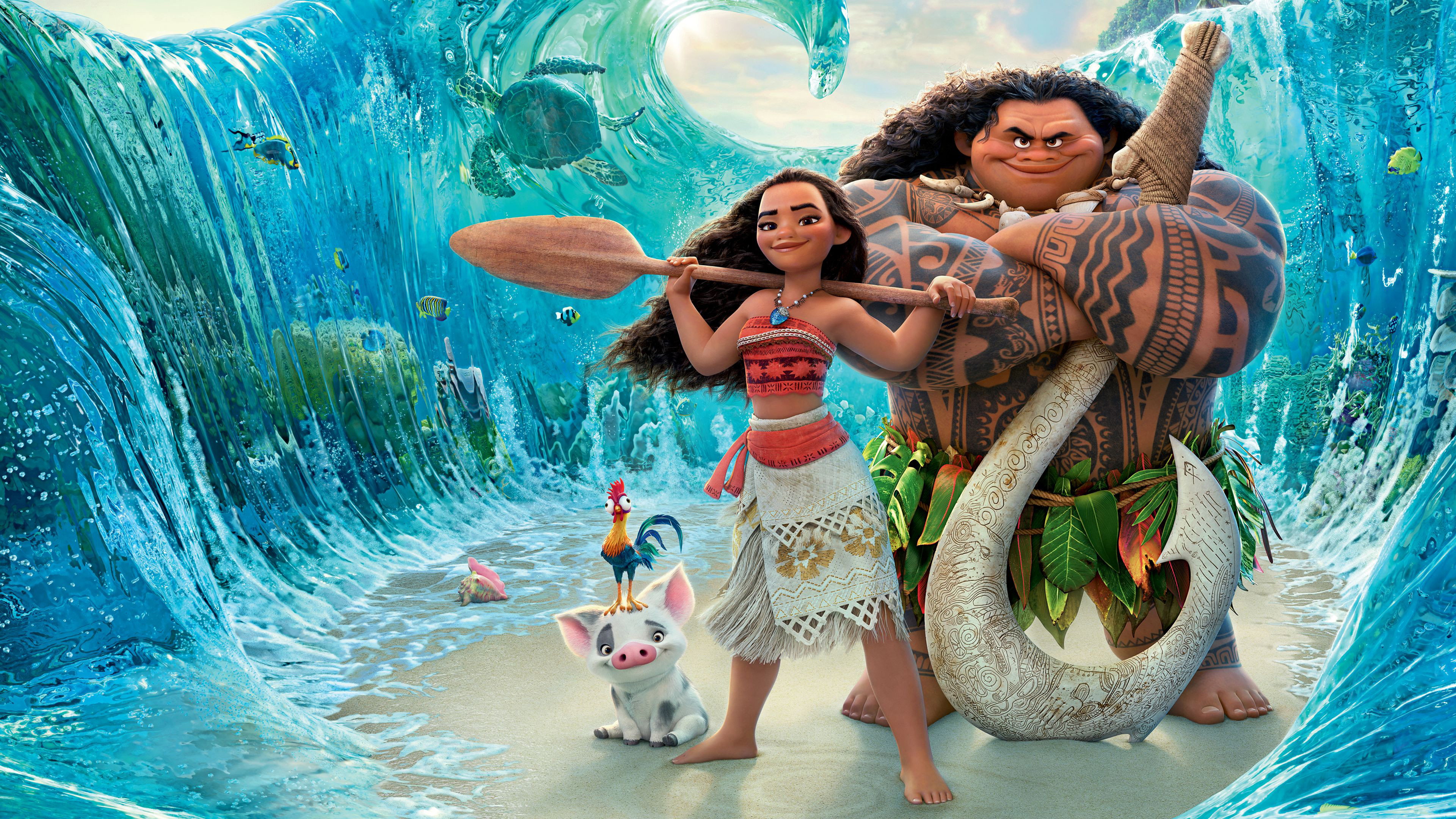
The case, in one place
Halfway through the movie a storm swallows Moana's boat. She cries out to the ocean for help, a wave takes her under, and she washes up on a beach she could never have reached alive. That wave killed her. Everything from Maui's island to Te Fiti happens on the far side of death, and Te Fiti's parting gift is not a boat, it is Moana's life handed back.
Why would the ocean do it? Maui's island, Lalotai, Te Fiti: these are mythic places no living human can reach. You could sail the whole ocean and never arrive. So when Moana begged the sea for help, it helped the only way it could, by drowning her, because a spirit can go where a girl cannot.
The fingerprints are everywhere. After the wave she never speaks to another ordinary human until she sails home, only gods, monsters, and the ghosts of her ancestors. Maui watches her drop into the realm of monsters and flatly says she's dead. She shrugs off blows that stagger demigods and a fall that would kill anyone. Her one real wound, a coral-torn foot, is simply gone by the finale. Then the goddess of life presses her forehead to Moana's, and Moana sails home to tell her parents she "may have gone a little past the reef."
The evidence
The ocean came for her at age two
It picked her from the start
A one-year-old wanders to the shore alone and the whole ocean rises and curls around her. The scene plays sinister for a reason: the ocean had already chosen Moana and was ready to take her right then. Her father snatches her back, and spends the rest of her life keeping her off the water.
Dad watched the ocean kill before
His friend went out. His friend didn't come back.
He knew what being chosen means
Moana's mother explains it: her father was Moana. He felt the same pull, broke the island's rules, and sailed out with his friend. The friend died immediately, taken by a wave. Her father chickened out because being chosen by the ocean just means you die. That is why he throws the heart of Te Fiti away as "just a rock," and why he guards Moana so fiercely. He has seen this before.
"A little past the reef"
The exact moment she dies
She sets sail, a storm rolls in, and she cries out to the ocean to help her find Maui. A wave hits, she goes under, and we cut straight to her washing up on Maui's island. It is the same death the ocean gave her father's friend, one big wave. She crossed from the living world to Maui's shore in a single cut, because the only way to reach him was to die.
After the wave, not one more human
Only gods, monsters, and ghosts
From the beach on Maui's island to the moment she leaves Te Fiti, Moana never interacts with a single ordinary human. It is all demigods, monsters like the Kakamora and Tamatoa, Te Ka and Te Fiti, and the glowing ghosts of her grandmother and ancestors. The instant she gets home she is back among living people on the water, no divine creatures in sight. Tamatoa even gawks at her: what is a HUMAN doing down here in the realm of the monsters?
Grandma returns as a ray, then a ghost
And the ancestors glow blue.
Spirits, meeting a spirit
Only after the wave does Gramma Tala reappear, first as a manta ray, then as a glowing blue spirit, alongside a whole procession of ancestors who all shimmer blue. Spirits do not see themselves as glowing; they see each other that way. We are watching this through dead Moana's eyes. To her grandmother, Moana would be the one glowing.
Even the chicken is a ghost
Heihei drowned with her.
He died on the boat too
Heihei was on the boat when the wave took Moana, so the dumb chicken is a spirit for the whole voyage right alongside her. Watch what the "idiot" bird actually does at the climax: as the heart is about to drop into the sea, Heihei snatches it out of the air and hands it back. Not so dumb once you know he is playing on the same team.
Maui just says: "She's dead."
Then he walks away.
The demigod confirms it out loud
Moana leaps into the pit to Lalotai. Maui, who is sure the fall will kill her, watches her plummet, says "Well, she's dead," and strolls off. He is not shocked she vanished into the realm of monsters; he states it as plain fact. And when she turns up anyway, he never asks how a living girl survived. He already knew she was a dead spirit, he was just confirming it.
His plan was to leave her in hell
Cave, boulder, goodbye.
Why locking her up made sense to him
Earlier, Maui steals her boat, shoves her in a cave, rolls a giant rock across the mouth, and abandons her. His tattoo begs him to go back; he waves it off, she'll be fine. That is only "fine" if he knows she cannot starve, cannot die of thirst, cannot age in there, because she is already a spirit. He was not marooning a girl. He was filing away something that can't die.
A body that can't be hurt
She stops taking damage the moment she dies
After the wave, Moana is unkillable. She rips a harpoon out of the hull that even Maui strains against, boards the Kakamora and beats every one of them, smashing one clean through the deck. She falls into Lalotai, bounces off Maui and a cliff, and stands up without a scratch. Tamatoa crushes and stretches her, lava drips on her, nothing. A living teenager does not do this. A spirit does.
The one wound that erased itself
Scraped yesterday. Gone today.
It was a different body
The only time Moana ever takes real damage is at the very start, when the ocean pins her foot in the coral and she has to smash herself free. That gash is badly scraped, and it was only yesterday. Yet by the time she walks toward Te Ka, her foot is perfect. The wound is gone because the body that was wounded is gone.
Same origin as an actual demigod
Thrown to the sea, reborn with power.
The movie already ran this play once
The film tells us plainly how Maui became a demigod: as a baby he was thrown into the ocean, he died, and the gods handed him power. Now watch Moana. She goes into the ocean, and comes out able to smash coral like paper and out-fight monsters that terrify Maui. Same recipe, same result. The sea drowned her and gave her back as something more than human.
Te Ka was Te Fiti all along
The heart goes back where it was ripped out
The spiral scar sits in Te Ka's own chest: the lava demon is Te Fiti without her heart, an incarnation of rage. The ocean can't return the heart itself because it cannot touch the lava. So it needs a body that can walk up and hand it over. Moana parts the sea, tells Te Ka "you know who you are," and presses the heart home. The monster goes calm and green. It was Te Fiti the whole time.
Te Fiti breathes the life back in
The boat is a ride back to the living.
The gift that looks like a goodbye
Te Fiti's one power is life; strip her heart and she brings death instead. Restored, she presses her forehead to Moana's, a real Pacific gesture of pressing noses and sharing breath, the breath of life. Then she gives Moana a brand new boat. Not a souvenir, a ferry back across to the living world. Moana sails home, hugs her parents, and says she "may have gone a little past the reef." She is telling them she died, and her father, who once fled this same fate, knows she finally did the thing he couldn't.
The call was inside her all along
The sea that calls is the sea that drowns her
The whole movie she sings that the sea calls her, that she is the girl who loves the water and it will not let her be. At her lowest she realizes the call was never out there, it was inside her the entire time. That is the pull that walks her straight into the ocean that takes her under, and the same voice that lets her rise as who she truly is: I am Moana.
Why she's "Vaiana" across Europe
There was already a famous Moana over there.
A princess, an adult star, and a trademark
In Europe the name was scrubbed to Vaiana, even redubbing every "Moana" out of the English track, which is a big, expensive deal. Fans point at Moana Pozzi, a wildly famous Italian adult star with hundreds of films and her own 1994 cartoon, Moanaland. Imagine little Italian kids image-searching their new Disney princess. Disney's official line is trademark: Disney Spain said the "Moana" mark is registered in Spain and several European countries, and director John Musker confirmed at Annecy that "Moana" was not legally available, so since "Vai" means water and "Moana" means ocean, the sense survives. Both can be true, and the porn-star version is a lot more fun.
Tamatoa knows too much
Give these two the buddy-cop prequel
Midway through Shiny, the best song in the movie, Tamatoa kills the lights and starts creepily crooning Maui's secret backstory at him. How does a giant crab know all that? Because they used to be close. Moana says "you two must get along great," and Tamatoa answers "well, yeah, until I ripped off his leg." Maui and Tamatoa were friends until that leg. Disney made a Gaston and LeFou prequel; this one writes itself.
Moana's real father is Maui
The myth, the pig, and who packs her bag.
A second road to divine blood
This one comes from MatPat's Film Theory. Moana's mother is named Sina. In Polynesian myth, Sina's husband was the demigod Maui, and Sina's son Kamapua'a was a pig. Moana's pet pig, the one that is never eaten and never really does anything, is named Pua, short for Kamapua'a. Notice who behaves like a parent: her "father" desperately tries to stop her from sailing, while her mother quietly helps her pack the boat and go.
Episode transcript
so i was wondering who do you think would win in a fight tinkerbell or krista tinkerbell or krista krista is murderous right tinker so krista beat hexes not that this is part of our podcast but this could be good it is part of our podcast right well no i was thinking about all day and the thing is because like tinkerbell i think technically has more feats but krista has more achievements and actual magic right she also no like i mean tinkerbell she drank poison and survived and she can be brought back to life by clapping and she's she's stronger than mighty mouse right and um yeah she carried pirates around the room well any any tinkerbell doesn't matter they're all tinkerbell but like she doesn't have actual magic which krista can control plants and she defeated hexus and she has murderous intent and krista does not like if the two of them were in a room i think tinkerbell would take krista down krista would hesitate well that
depends did krista fall in love with peter pan oh there you go gotta have a good day then that actually makes things interesting krista totally would fall in love with peter pan he's totally your type yeah well if her type is zach i don't know she likes like slackers with mullets she likes humans maybe just the fact that he's human would be enough i don't know that peter pan is human he looks more like a goat child this isn't a fern gully episode although we should do one at some point we should but first we need a decision okay so brita it all comes down to you who would win in a fight krista or tinkerbell krista i'll be flifter i mean i'd have to vote krista too just because krista beat hexes tinkerbell didn't beat anyone if we had more information on tinkerbell i think we could easily make an argument but we don't well also based on what you guys have said technically krista sealed texas
texas krista sealed hexas inside of a tree which he's shown he can escape before so i mean she didn't really i mean he could come back however speaking of ridiculously cool overpowered villains with tim curry voices that love to sing i think we've got a great show for you today hello and welcome to the popcorn isn't real i'm leif eric i'm here with my brother torvald and we're here with special guest my sister brita hello that's right just call us my brother my sister and me because yeah that's who we are today brita is an anthropologist extraordinaire an anthropological archaeologist yeah i am i am an archaeologist which is a type of anthropology right okay right and it's also brita is an archaeologist extraordinaire so if you picture like indiana jones that's what brita does so she's really great she's archaeologist she's tell us about all the great things you've done uh i mean what makes you the person to talk about this movie
that we haven't established what it is yet right so i haven't done a lot but as an anthropologist we are going to talk about moana today uh and as an anthropologist i think i have a pretty good background for looking at this and other movies that uh depict different types of cultures because that is what anthropology does we go around the world we look at different cultures we try to understand them on their own terms and i can bring some of that to moana although not a lot because it was specifically uh designed to be in an unnamed unspecific location yes so we're gonna be talking about moana which i'm pretty excited for but first i actually want to ask you both how do you guys feel about moana like uh was it a good disney movie is it a classic disney movie or is it just another drop in the bucket of disney movies well i mean i have some thoughts on that um i want to preface all my thoughts in this episode with it's going to sound like i hate moana but i don't i
actually like moana every time i watch it i enjoy it i think it has some really good parts but i also think that there are many aspects of it that are that could have been better written um and so i'm probably going to dig into a few of those things in this episode yeah um but i do think it's an enjoyable disney movie and one thing that i can say for moana it has a lot of catchy songs right like normally in disney films especially newer ones it has like one catchy song or in the case of tangled no catchy songs yeah we can thank lin-manuel miranda for that because he wrote the score frozen has let it go and like what else what other song do you remember from that movie like they're all bad like uh people like the snowman one okay right we want to build a snowman So that's like, but that's only like 25% of their songs, maybe, or something. I don't know. There's the one about love is an open door.
Love is an open door. No, that was actually an okay song, too, right? Right. Yeah, no, there are okay songs. Well, okay, so I feel similarly to how you feel about Moana. I had no idea that Moana even existed. I think it released, and I didn't even know that it was a thing. Like, I'd never even seen it somehow. But then I was watching Zootropolis here, and it's called Zootopia in America. But I was watching that, and I saw that scene with that dude was selling all those bootleg DVDs, and I was like, what are these even supposed to be? Because I didn't know the movies. And I was like, well, that one looks really interesting. And I was like, oh, that's a real movie. I should watch that one. But part of the reason that you might not have known what it was is because it has a different name in other countries. Oh, right. No, I was going to get into that. So speaking of movies with different names in Europe, Moana in Europe is called Vajana.
The movie's called Vajana. Moana's called Vajana. And this isn't just for like dubs in other languages. The English version has been redubbed every time they say Moana to say Vajana instead, which is a pretty big deal. The theory that you told me is that some people think there might have been like a porn star who was more famous. Right. So this is just a mini theory that we're going to go over real fast, Breida, then we'll get to yours. So a lot of people have speculated that this was to avoid comparisons with apparently there's like a really famous and prolific Italian porn star named Moana Pazzi. But at first when I read that, I was like, this is kind of ridiculous. There's no way. But then I looked into it and it gets a little more believable. So it turns out that Moana Pazzi did a lot, like a lot, like hundreds of adult films. It's quite possible that maybe Disney didn't want little Italian kids to go on Google image search Moana and see a bunch of porn images, right?
Because that's what would pop up if you searched for that in Italy before the movie Moana came out. She was, in fact, so well-known and beloved that she was featured in a 1994 cartoon all about her named Moana Land. So we've got this porn star. She's well-known. She has a huge fan base. She is an animated porn star princess, and she's named Moana. Like, I can totally see why Disney would want to distance themselves from that. Why bother continuing to name her Moana in the English-American version if they're going to change it to Viana everywhere else in the world? Well, so then we'll get to the official answer. The official answer from Disney is Disney Spain tweeted out that the Moana mark, which I assume they mean trademark, is registered in Spain and some other European countries. they changed the name Moana to Viana just to avoid any copyright or trademark debates. And then John Musker, who is the writer and director of Moana, he also confirmed this
at the Annecy Film Festival. He said Moana is not legally available for use in most European countries. So since Vy means water and Moana means ocean, they just named her Viana because it still means water. Unlike in America, Disney does not run the lawmakers. yeah disney doesn't own trademarks and copyrights like they do in america right so so that's i think very viable as well but i prefer to believe the porn star story because i think it's more fun and it's it's also still believable right yeah maybe it was just a fringe benefit of changing your name though anyway brita how do you feel about yeah so my feelings about moana i actually think it's a very good movie i think it is uh really engaging there are parts i don't like but overall i think it's a really fun movie for kids and i think it will become a classic but to give a little bit more of an anthropological perspective i also really like it because moana
has been instrumental in teaching young kids endangered hawaiian uh language the endangered hawaiian language that they have recorded a full version of the movie in this very obscure and very few people speak it uh dialect of hawaiian and they are now using that that version of the movie to teach the language to children so i think that that's a really cool thing that it's accomplished and that really it gives it a step up in my opinion dude that's pretty cool like go disney and i will say that like again i am not an expert in polynesian cultures or languages or any of that i i have taken a class and from my limited knowledge about the oceanic cultures i think they did a pretty good job of representing them obviously they changed some things there are some a lot of really weird crazy things in every mythology that sound weird to people outside of that culture. And so there are things about, particularly Maui, that would not be great for
American viewers, I think, that kind of just got swept under the rug. But that's okay. They're making a light version of these mythologies that's not place-specific. Right. Do you think they were more true to Polynesian mythology in Moana than they were to ancient Greek mythology in Hercules? Or, sorry, Roman mythology in Hercules? It's both. Yeah, well, the fact that his name is hercules yeah instead of her that makes it roman right it does make it roman but his mom is still hera she's not right right so right that movie was full of problems so yeah adhere to the mythology like at all like geez why wasn't zeus going around having sex with cows and stuff yeah well i could see why they wouldn't want that in a children's movie all right all right brita what is your theory about moana lay it on us i want to hear it all right so the theory we're going to be discussing about Moana today is that at the beginning of the movie Moana sets off on
her journey to go restore the heart of Te Fiti to get Maui and they're going to go together and do that and while she is sailing in the ocean there is a big storm and she cries out to the ocean to help her and then she goes under the water and the next time we see her she washes up on the beach and the theory is that at that point Moana is now dead and that she is dead for the remainder of the movie all the way through to the part where she returns the heart of Te Fiti and Te Fiti rewards her by bringing her back to life. And then she's able to return home to her family and is alive again. And there are some reasons why this theory makes sense that we can get into. But that's the basis of it. Okay, so I just want to get this straight. So you're saying she dies and is dead for basically the whole length of the movie where things happen. Yes. But then comes back to life at the end when things stop happening again. Yes, correct. Correct. Okay. So you're saying the
whole movie takes place in like the spirit world or in heaven or in hell or something essentially in the spirit world right yeah okay and and so does this mean maui was dead not necessarily so the argument is that maui and his island and lalotai all of that and tefiti were all these mythical creatures and beings that moana could not interact with as a living normal human that she could sail the breadth of the ocean and she would never reach maui's island because humans just can't go there and so as a result when she cried out to the ocean to help her the ocean actually helped her by killing her at that point because that was the only way she could reach maui the ocean's so so nice so helpful the ocean has its own issues so the ocean in this movie i kind of agree completely with maui's opinion on the ocean i do too honestly and should do things by itself instead of forcing Moana around to do random crap for it yeah and for at least like the
first half of the movie I had a theory that maybe the ocean couldn't move the heart of Te Fiti and that was why it needed to get a human to do it it clearly can it can do whatever it wants so I don't know why well and like the first time I watched the movie I was actually very confused because I kind of thought the ocean was Te Fiti but it's not yeah like I thought the ocean was the manifestation of some god and we would find out who that god was and then I assumed Te Fiti but actually it's literally just the ocean it's just the personified ocean yeah so i i was torn between thinking either the ocean is tafiti or the ocean is her grandma no it's neither the ocean is the ocean is the ocean the ocean is the ocean and it murdered moana is this theory so at the start of the movie moana is two years old she's looking for seashells in the ocean all alone and the ocean comes alive so how could she interact with this living magical ocean monster if she wasn't yet
dead if you're saying that you have to be dead to interact with spirit things no there's still magic in the normal world like there's still the ocean is alive no matter what and and like the the effects of Te Fiti like draining the island and it's turning black that is all real Moana just couldn't reach these mythical beings real quick I just want to say about that scene the first time I watched it I was like oh no this movie is gonna get real dark real fast like because you got this like one year old two year old girl yeah running over the ocean to look for seashells all alone and the ocean completely surrounds her too right yeah no well yeah that's the beginning was very sinister yeah she was going to die and then she didn't yeah i was like oh okay well you're leading a toddler into a dangerous situation with seashells yeah geez why was the ocean being so sinister and i would say that's good evidence for this theory that the ocean had
already picked moana as a little two-year-old and was like oh she can do this and was about to murder her yep was about to say okay time to go meet maui and then the ocean changes its mind and waits until she's much older or perhaps it doesn't change its mind right her father saved her father saves her from the ocean brita what you're saying is that the ocean was ready to kill moana right then at the very beginning of the movie and her dad saved her and then her dad spent the rest of her life trying to keep her away from the ocean because he knew it was going to kill her i don't know that he necessarily knew that no i love this brita this is the best evidence for your theory and i never even considered it because her dad was so adamant that specifically moana should never go near the ocean yeah and you know what happens next time she goes near the ocean she gets freaking trapped underwater both times yeah the first time she gets trapped underwater in the coral and injures
her foot and presumably literally the next time she goes near the ocean yeah and she tells her grandma after that like dad was right and he was yeah well and also presumably like because this isn't as we established even though it kind of seemed like it was some random god who can just control the ocean no it is the ocean meaning everything that the ocean does is that entity doing so it is trying to kill her for sure and also it knocked her over it pinned her underwater when her leg into that coral yeah it tries to kill her with waves the minute she sets sail and then later on it waits a little while and then kills her with a big wave which is exactly how killed her father's her father's friend so like he had very good reason to keep her on that island so frida do you think her dad's friend was like its first choice like he also was given this epic quest i mean i think it's possible or maybe maybe your dad was given this quest too and that's why
when she shows him the heart of the sea he's like this is nothing it's just a rock and throws it away and that also makes sense it away it's maui when she gives it to him and he's scared of it and also her grandma when she explains the the or her mom explains to moana like your father doesn't let you do this because he is or was you she explains he felt exactly like moana this draw to the ocean that he had to go out and he broke the rules of the of the uh island to go on the ocean with his friend and then his friend immediately died so i think it's it's easy to see how that could be a parallel so the ocean chose her dad and his friend yes and then he chickened out after seeing his friend die i was like oh no no way chosen by the ocean just means we'll die which is true yep so so that that's one point of evidence but i think another really strong best evidence point of evidence is the fact that from the time that she washes up on
maui's island to the time that she leaves tefiti she never interacts with a single normal human She only interacts with divine beings like Maui, with monsters like the Kakamora or Tamatoa. She interacts with Te Fiti and Tekal, and she interacts with ghosts of her grandmother and of her ancestors. But she doesn't interact with a single normal human. And as soon as she gets back from Te Fiti, she goes sailing with her family. They're all in the oceans, and there are no divine creatures. Maui shows up, but he's a hawk. He's not as Maui. And her grandma also kind of shows up as a manta ray, a real manta ray, not like a spiritual projection. Not a glowing, weird manta ray. Yeah. So at literally the very beginning of the movie, we see her grandmother telling this backstory. Yeah. And you know who bursts in and is really angry about this story? Her dad. Her dad, yes. Who also knows this story and got chosen by the ocean. He hates the story.
Why else would he be so mad? Like, this makes so much sense now. I promised that I would get into some things about this story that I feel could be better. I do want to say this suffers from a problem that most recent Disney movies suffer from. And it's a trope that's not necessarily bad. It's just that Disney uses it a lot, which is that they start with like five flashbacks. Instead of just starting where the movie starts, they start with literally the beginning of time. Maui, right? then they go to moana as a baby and then they go to moana as like a preteen and then moana as a teenager and then after she's a teenager we still have like a good 20 minutes of movie before she gets right like there's just so many odd two more flashbacks between her dad's friend dying and the dream she has of her ancestors yeah the movie could be told a little more efficiently like if they started when she's already an adult we would know that she likes the ocean but she has accepted
her duty right instead we have to go through she loves the ocean she wants to explore oh wait she sort of accepted her duty oh wait she goes out to the ocean almost gets killed now she's really accepted her duty oh wait flip again now she hasn't because she gets another long backstory flashback about these ancestors we don't even care about and learns that they were explored like it's just so and like this is the problem with so like even frozen the biggest problem with that movie was just the opening that they had like 70 flashbacks and and just needless story that we didn't need to know we could start with anna and and elsa and just like it's more interesting if you don't exactly know why that there's tension between them or why she stays in the room to be revealed organically yeah anyway so that's just my complaint about the beginning of this movie i think they do that to make it more easily accessible to children or that's why i think
they do right that's what i was gonna say it's like it's like if we started mulan when she was a baby and she wanted to fight but then we see how the new live action mulan exactly well no this is all the live action movies are now doing this they're taking a good efficient story and then they're spelling everything out for your thing but like yeah if mulan started with her as a baby and she really wants to fight but then oh something happens now she doesn't want to fight she just wants to be a good daughter and get married now she's a preteen and she's practicing getting married but then she decides to go out and fight again oh wait no she actually got hurt so she's not she's not gonna do that she really really decides she's definitely gonna be a bride this time so she goes oh she's not a good bride oh no her father gets conscripted like now we're at where the movie actually begins right like there's no reason for any of that previous stuff
because Mulan is a great movie without any of that you know and so would Moana have been I watched Moana with my son and during that entire opening sequence I would agree with Brita that they're simplifying it for kids except that my son kept asking me he was like what's going on here why is she growing up so fast like i thought she was a kid why is she older now i was like i said i think they think they're simplifying well and he was like well why didn't i grow up that fast well i'm like uh maybe you'll grow up in a few years okay brita back to your theory i have two more questions regarding the beginning for you number one question moana's grandma who loves the maui myth and wants to fulfill the ocean's desires she dies yes and goes into the ocean why didn't the ocean use her her body didn't go in the ocean i think that the ocean well her spirit sure did yeah like she was a manta ray swimming
around surfing around the rest of the movie why couldn't she have done the the deed i mean i don't know i think the ocean just chose moana it decided moana was going to do this and at the time that moana dies she has the heart of tefiti so perhaps that's part of it right so i was gonna say maybe you need to physically have the heart when you die and die on the ocean perhaps but also it seems like the grandma could have arranged that it makes it great that the heart of tefiti was right on the shore perhaps her dad dropped it while he was trying to get killed that's true yeah but i mean The ocean gave it to her. Yeah, I know. Interestingly enough, though, Moana, throughout the whole movie, does not think that she can return the heart of Te Fiti. She thinks that only Maui can do it. She thinks Maui needs to. Do they give a reason for that? Just because her grandma told her to it. No, just because Maui stole it.
So her grandma's just wrong. I think from her point of view, it's like an atonement journey for Maui. I think that's true. And also, I think there might be some idea of, like, I am just a human. Maui is a superhuman. He has the power to do this thing. that would make some sense if maui returning and atoning was somehow what distracts tekal long enough that moana can put the heart back but how it is maui doesn't need to be in this movie right like moana could have done play because like moana could have just gone there and returned the heart herself and it would have been fine right i mean i guess maybe he helped her get through that little cliff thing but i kind of think she well like also her powers are way better than maui's her powers are just the ocean yeah she can do so much more than he can it's true um i do think that that was do anything how it's true the ocean as maui said is very just kind of changeable and does
whatever it wants you cannot depend on the ocean like yeah except that you can because disney used it as a lazy plot device to just force their characters together and have their story work once they realized that hey this story kind of doesn't work right there are a lot of plot holes hey maybe the ocean can fill in all of those plot holes hey water does flow into holes the writers knew that the ocean was very convenient because they keep having maui comment on it like throughout the whole movie okay so she meets maui on the island and i have a question for you both of you this doesn't have to do with brita's theory it's just something i always wondered why does maui need a boat like why can't he get off that island without a boat why is he so excited in his song he says maui can do everything but float yeah okay they fill that plot without the ocean later well maui says all right i'm out and jumps in the ocean and swims and floats yeah so
maui can float so well he can swim but presumably they're still close to their island yes that was my thought as well apparently he's just gonna maroon himself yeah he was just like forget this i'm going back to my marooned island right but i'm just saying so maui is a demigod we know that he has constitution and immortality well we don't know that he has immortality he could just swim to another several times he thinks they're going to die right and yeah but he's also been on that island for like what a thousand years i have a theory even though moana is dead and she is now some sort of spirit creature just like everything else she interacts with spirit creatures can kill each other because they do seem to be afraid and like this is this is supported by other mythologies like the norse gods can kill each other and stuff like that so so you're saying he's afraid of monsters coming out of the ocean and killing him i think well yeah kind of well maybe because like
he doesn't want that thing it's true he's terrified of the kakamora yeah and the kakamora like moana defeats the kakamora by herself and maui seems pretty scared of them yeah and also i kind of had a theory that maybe moana gets some special powers of demigod just because she dies and becomes this spirit creature because she can throw that arrow hard enough that it embeds in her boat like she's like yards away she's so far away and she can slide down on like a zipline her superhuman abilities was one of my other points that i thought supported her not no longer being at least a normal human okay but so right now we're talking about maui needing a boat so i've heard some people try and justify it by saying that the ocean is keeping him there that even if he tries to swim away the ocean will put him back on the island how would having a boat help him in that case like if the ocean puts him back it would put his boat back too like well no it wouldn't because the ocean wants him
to go to Te Fiti because when he jumps off to swim like you say the ocean puts him back on the boat not the island right right I'm just saying he doesn't know any of that he was caught there he just says I got a boat I can leave so here's here's my actual biggest complaint with the whole movie is that they introduce a problem for themselves that they have a lot of trouble fixing and also kind of almost ruins the whole movie and it's that maui and moana hate each other this creates so many problems because the ocean has to keep putting them together because they hate each other right like if they just kind of liked each other or had like goals that aligned somehow then that would fix the problem they wouldn't need the ocean to fix it but the other reason this ruins the movie is because why do i care about maui or moana if they don't care about each other right like my investment in the characters is often influenced by their investment
in each other right it's like in aladdin aladdin and the genie really like each other they are friends they establish that quickly and easily through song at the very beginning you ain't never had a friend like me like rush hour this is like chris tucker and jackie chan you know they hate each other but they form a bond as they go along but like i feel like it's kind of uh disney has gotten more corporatized right so there are more and more executives over the writers who think they know what's right saying what makes a good story is conflict and so the writers are like okay the main characters hate each other right it's like a rom-com kind of thing almost right they hate each other but it's not romantic you know but like i mean it's just that kind of lazy thinking that like this is the only way to do it whereas if you look at a movie like aladdin the genie and aladdin have plenty of conflict between them even though they really like each other they're
best friends you know in some ways the conflict is even more intense because they're friends right because i care about the when they argue whereas like i don't care when moana and maui argue constantly all the time you know in fact that was actually the next thing i wanted to talk about because so maui he gets her boat he takes her boat he puts her in a cave he puts a giant rock in front of her cave and then he leaves right like was maui's plan to murder this girl he knows that she can only be killed by other spiritual creatures she can't die from starvation anymore because she is a spiritual creature yes okay so his plan was just to lock her in hell and that's basically exactly what he tells his little chest tattoo because his chest tattoo gestures to her like hey go back and help her and he's like ah it's fine she'll love it on the island like he's just gonna leave her there this plays into something too with the ocean just trying to
murder her i think that we could say that these demigods and spiritual beings have sort of different uh maybe morality and ethos than we have that they don't see it as just so cold-hearted and evil to just murder a girl or lock her in a cave for a thousand years because they just have a different kind of understanding of these things is the realm of monsters different than the spirit world because you say she's already in the spirit world and i would i always when i watched that movie i assumed that that mountain was like the gateway to the spirit world i don't think that it is i don't think there's any evidence really to support that it is all they say is that it is the realm of monsters and when they go there it is filled with monsters and there are no spirits there's no other humanoid beings so at this point maui asks why didn't the ocean just bring the heart back to Te Fiti by itself or bring him his hook and I kind of wonder the same question so at least
the question of why the ocean didn't bring the heart back to Te Fiti itself I think is answered by the time when Moana is like the ocean hurts Tikal she can't move off the reef like it the ocean cannot touch Tikal so it cannot put the heart in her so yeah how did Moana survive that fall into that mountain yeah yeah that's a good question that is a good question and I think this is one of those moments where moana shows some very superhuman supernatural abilities that a normal human would not have so she jumps into lalotai she swims for a while and then falls out and maui does a perfect dismount and lands wonderfully and then she falls on top of maui and then falls on several more rocks and falls even deeper in a way that absolutely would have hurt or killed a human and i think that she couldn't have done that if she were still alive at this point right and the only time we see her get hurt is at the very beginning when her foot
gets caught in the coral and her foot yes despite being pretty badly scraped and that was only yesterday is fine at the end of the movie when she's walking toward taka and i would argue that's because she's no longer in the physical body right that was injured by that coral and like other than that like she does lots of things like this throughout the movie and she never shows any sign of being winded any lasting injuries any like not just that so i want to say that her fall is like ostensibly superhuman maui clearly thinks she will die if she jumps in and then she jumps in and he says well she's dead and walks away this i think is one of the best confirmations of this theory because maui literally confirms it just then he says well she's dead he's just stating a fact he didn't maybe know it before then now he knows oh she's a dead spirit you know right that's why she was able to come and that's why so this one moment without this theory it ruins the
emotional story of the whole movie because they don't care if the other one dies so why do i care about them unless this is just maui stating a fact he's not that he doesn't care about moana he knows that she's dead that she'll be fine because she can't so before yeah and he confirmed it right then although i would say that goes against your theory that he didn't think he was killing her by trapping her in that rock thing if he wasn't sure then he certainly thinks he's dead yeah well he he suspected but he hadn't confirmed it until that until that moment he was like yes she is definitely dead he was willing to be a potential murderer or maybe it was just like for one brief moment he worried about her but then he was like reassuring himself he's like you know she's dead yeah it's fine oh she's dead it's okay this isn't really related to what you're just saying but i realized that i think one of the reasons that the ocean keeps pushing moana and maui together and
wants them to return the heart together rather than just having moana do it could be in fact to teach moana to sail because maui states that the ocean really likes people sailing around and discovering islands on it and that the ocean's sad that people aren't doing that anymore and that's why it set moana on this quest and if that's true moana is now coming from a village of people that do not know how to sail and one of the really important skills she gets from this movie is that maui a master wayfinder in his own words teaches her how to sail and at the end calls her a master wayfinder here wait eric we moved on too fast so you say she fell down he goes she's dead he's just stating a fact i think this is really interesting because something that always stuck out to me is he thinks she's dead and walks away if you watch this as a normal movie right like he believes that she died and she's gone and won't be in the rest of the movie anymore and yet the next time maui
and moana meet each other he is not surprised to see her she's surprised to see him he just peeks over her shoulder and starts explaining things and then she punches him and see that's why i believe that that's the biggest confirmation of this theory is that moment right there you're right if he believed that she died he would have been like oh she's alive that's weird why is she alive but no he's completely accepting that she's still there it's because he knew she was dead all along he was just confirming it but can i say just uh because we're talking about lalo tai i just a small note when she falls all the way down she sees like a twilight princess shadow monster like from Zelda Twilight Princess that's like really cool and it's walking toward her at like a low frame rate like it's Sadako or something and then it just gets spit away by Geyser I'm like why couldn't we see more of those
we saw so much of the stupid coconut people like they were just the most forgettable villains ever like the second time I watched it I was like I don't even remember this part I agree I thought the exact same thing I think it was probably too scary of a monster I agree so they can only use it as a jewel I'm surprised they brought it in at all because yeah it was very scary but very cool let's talk about the best monster in this entire movie and in every disney movie mr tamatoa dude oh he's so freaking cool yeah i love tamatoa he's pretty cool yeah i personally uh like to tell people that they should make a series of like buddy cop kind of films between maui and tamatoa before maui cut off tamatoa's leg i mean canonically they were friends until he off exactly so i would love to see all that says you two must get along great and he says well yeah until i ripped off his leg exactly so they were friends they did get along great right and this
this actually fits because one of the part that stuck out to me most about tamato's amazing song which by the way is amazing but the part that sticks out to me most is that midway through the song he suddenly just switches gears turns out the lights and starts creepily singing about maui's backstory and it's so creepy for tamatoa to know that like why does he know that stuff it makes sense yeah no that's exactly why i kept saying that because i was like yeah there should be a reason that these two knew each other well enough that tamatoa knew maui's backstory and can use it against him if disney's making a prequel about gaston and lefou they can make one about maui and tamatoa and they should no but i want to say like the actor who plays tamatoa is Jermaine Clement and he just has like an amazing voice like he's in Men in Black 3 and like that's just his voice that's just the voice that he has and like I'm just confused as to why
he doesn't have a career like Tim Curry you know like he should be in everything no he's great Tamatoa's song Shiny is the best song in the movie and also one of the best songs ever like as far as Disney's concerned but it is divisive I'll say I watched this movie for the first time with freya and valkyrie and they ended up skipping through the song they watched about half of it and then said they didn't want to watch the rest and i was actually talking to a friend shortly after moana came out and he was saying to me like oh yeah i loved the movie but man there's one part of it that i just really didn't like and then i cut him off i was like yeah well there's one part that's awesome because i knew what he was gonna say i was like shiny is the best song ever and he was like yeah I guess it's just a love it or hate it sort of thing but but the what you were you what you were saying so like the songs at the beginning of this movie are really bad exposition
and unnecessary exposition whereas this song is just amazing exposition because it's all told through conflict there's this awesome cool fight scene and we're getting all of Maui's backstory all at the same time it's not like at the beginning where we had to get like her ancestor's backstory and her father's backstory. Like, why do we have to know her father's backstory? And it suddenly made Maui's backstory really meaningful and real because at the same time as he's being made vulnerable by us knowing his backstory and Moana knowing his backstory, he's also being made vulnerable by the giant crab smooshing him against the wall. I agree. So anyway, that is very good storytelling. The writers really pulled it off there. So I already talked about how I thought maybe Moana, when she died, sort of became a demigod did the chicken hey hey also become a demigod i mean at the very least it has to be a spirit right yeah yeah i i would have argued that yes
the chicken hey hey died with her and is a spirit during the movie and then i will say so the first time it gets the stone it just eats it which maybe it did that on purpose but the idea is like oh this dumb chicken but the second time when she's about to lose the stone while she's fighting to call it grabs the stone before it falls in the water and then gives it back to the water because it would have fallen in the ocean the ocean which is there yeah it's true the ocean could have just given it back but it's not gonna there's no conflict here just just let in fact throw the stone in the ocean it's safer there it's true that is the most safe place for the stone but okay one one other thing about the end of the movie so the big conflict here was that they needed to get past uh to get to tafidi right and they couldn't get past the car because the car was just too big and strong and powerful and threw lava at them and that was why maui left
because he got his hook broken he's like oh i'm out of here this sucks so moana goes back and manages to get past takah just barely on her own and then maui shows up from the direction of the island he flies past the island to moana to get to takah apparently getting past takah was no problem well sure though like get there if moana is distracting takah and i also think that part of it is takah is drawn by the stone and so the fact that moana had the stone drew the attention to her and maui can do whatever he wants they could have been a lot smarter can only be in one place at once and takah is very slow all maui had to do was grab the rock fly to the other side of the reef and fly to the island which he clearly did because he flew from the island well but that wouldn't helped them anyway because tafiti wasn't on the island yeah but they didn't know that but they didn't know that which he should have known that because he flew past the island he wasn't paying
attention so do you think taka was attacking them to get the heart or was attacking them because he just wanted to murder so i think that the implication by the end song where moana sings to her has her come to her and says you know who you are i think the implication was that she was just angry that she had lost her heart and had become this kind of incarnation of anger and was just lashing out and i think she did want the heart but she also wanted to kill them um and and that when moana finally offers her the heart and says you know who you are that's her saying like you are not this incarnation of rage and that's why she calms down she goes entirely black instead of with the lava streaks through her and then moana's able to put the heart in her chest and not get burned yeah and that goes along with the theme of the whole movie of just like everyone needs to accept who they are inside and they're all like the shiny guys being shiny on the outside
Maui is being all flashy on the outside and pretending to be so cool when he doesn't think he's that cool but wait since we're talking about her song so in this song I don't remember the actual lyrics but she says something about I'm the girl who loves the island I'm the girl who loves the sea it calls me right yes and then at the end she says that the call is inside of herself i am moana and we know that she dies by going into the sea could this be the call of the void yes so the call of the void is a psychological phenomenon and i am not a psychologist but it is the idea that people will frequently have intrusive thoughts to basically kill themselves to like jump off a cliff or into the ocean or in the ocean and yeah and it's not a suicidal like desire to die it's just the call of the void it's like i'm on this really high building and i want to jump off it like you feel like that and then you're like no no no um and so
yes i think this could be a manifestation of call of the void i think this just went to a real dark place and i don't really see any evidence for that but i mean she jumps into the sea and then she does and she keeps talking about how the sea calls her but actually the call is inside of her i still don't really understand that line well but it makes sense because what she's saying is all psychological oh okay so yeah the call wasn't out there at all it was all in her head trying to get me to kill myself the popcorn wasn't real the popcorn wasn't real i think what they were really trying to say there was that it was the call to be who she really is and not be shiny yeah right and she she is who she really is she's a wayfinder yeah right like she's in the sea so brita at the very end tafiti is restored and then kind of like gives them gifts maui apologizes and gets his hook and then Te Fiti doesn't really do anything
for Moana besides rubbing faces with her and then giving her a boat was that boat like the boat on the river Styx going back to the real world because you say she resurrected her but I didn't see any sort of resurrection going on here Te Fiti has the power to create life we know that Te Fiti is essentially the forest spirit from Princess Mononoke she's something that brings life but if you chop off her head she'll murder you yeah i mean you're right yeah but like we do know the one thing about tafiti is that she brings life and if you take away her heart she doesn't do that anymore she brings death and that maui stole the heart of tafiti so that he could give it to the humans so they could create life which i want to point out humans can do anyway it's called sex i mean i guess he's saying all humans were sterile before they got that but then they would all be sterile again at the end of the movie right but what i mean is humans can already was about moana sterilizing the human race
humans can already create life so this part of tafiti must have given them the power to do something other than that right which might mean resurrecting people like restoring life and so we know that that seems to be tafiti's only power so i think that that gives credence to the idea that yes um and so yeah we've seen that tafiti she creates just like plants and they grew up around her similar to the forest spirit um and i think that that's very easily what she did with moana too right just by touching her moana is once again filled with life and they didn't necessarily make a big deal of that i will also say that touching faces thing they did is a real new zealander tradition where you press your heads and your noses together and it's called breathing the same air and it's something you do to really like um solidify your bond of like friendship or familial bonds i don't know a ton about it i think it's okay and if you breathe the
same air as the life. But anyway, so I think that that is a really, I mean, again, I don't know that much about any of the Pacific Islander mythologies or whatever, but I do know that that is a real practice. And I think it's cool that they had this kind of moment of it. And I think, yeah, that's an excellent moment where she was touching the goddess of life, breathing the same air as her and then was given life. Yeah, the breath of life. Well, I think that's a really cool theory. And I think there's a lot of evidence for it. And honestly, I think the best evidence is her dad having done this before and just freaking out the rest of his life about that evil ocean that just wants to kill his family. And it also makes sense where at the end of the movie, she comes back, hugs both her parents, says, I think I may have gone a little past. I may have gone a little past. Yeah, meaning I died, guys.
And then her dad responds like, oh, that's okay or something. I don't actually remember what he says. But like he knows it's fine now because she fixed the problem. The ocean will no longer try to murder. he knew that she did the thing that he didn't do yeah and so then he's like yeah now the whole village can be wayfinders again it's fine just going back a little bit when she sees her grandmother and then all those spirits of her ancestors who float by um they're all blue and glowing yes so i did want to talk about this so i have there again two ways that you could explain this the first is that she's maybe not entirely dead she's in like a state between life and death i don't think that really holds she's a demigod like or she's a demigod like maybe spirits don't see themselves as blue and glowing? Yes. So that's the argument that I was going to say is that spirits see other spirits as blue and glowing. And so we are seeing this scene through Moana's
eyes. But if we were seeing it through her grandma's eyes, her grandma would have been normal and Moana would have been blue and glowing. Okay. But no, this is a great point to talk about the theory that Moana is a demigod. So first thing I want to say because this is something I looked into a lot while I watched the movie because I thought it was more believable than the Moana's dead theory. But I actually kind of like the Moana's dead theory they're kind of the same though but um she could be both they are so well here's the thing we know we know that baby maui was thrown into the ocean as a human he did not survive that he died and then the gods granted him the ability to be a demigod right yes we also know based on your theory that moana was thrown into the ocean and then suddenly was super powerful maybe she was granted the ability to be a demigod would you argue that she is still a demigod at the end of the film
she gets resurrected by tafiti we know that now tafiti gives the hook back to maui but she never touches maui right so maui remains a demigod i think moana is no longer a demigod by touching tafiti yeah and that's interesting too because when he takes the heart he does it with his hook he pries it out with his hook and then grabs it rather than like reaching down and touching her but counterpoint in wreck it ralph ralph breaks the internet moana can just straight up summon water just like in a giant spout just because she feels like it yeah well that's a moana who exists but also pocahontas has the power to control wind which she did not have yeah i don't think we can use that as canonical kind of make wind well she painted with its colors but no so the theory kind of goes at least the version that i've kind of seen evidence for it goes that the ocean is either a god or is controlled by a god and that this ocean god
clearly chose moana so she is a demigod of the ocean and that her powers kind of grow throughout the movie when she like embraces the powers i don't know i mean why do why do gods make demigods at all we don't know and why doesn't maui have any powers like period uh he can blow air really really hard right he's really strong and well this is the thing moana has the same powers as maui except for the fish hook like they're both really right then that's it we've established whenever moana hits anything it's with incredible force like you said eric she throws that harpoon so hard it embeds itself in the ship and she's able to zipline down it before that when they first fired the harpoons at the ship maui starts yanking them out of the ship and it's hard for him like he's straining to get them out moana rips one of them out of the ship it's the one in the ship which is stopping the ship from moving and she rips it out she has to struggle for it but
that's pretty strong so then she jumps over to the kakamura ship with just an oar and bashes the crap out of them she fights all of them at once her explanation for why she's one of them down through the boat itself yeah like rita said her explanation is that moana type is super effective against coconut yes it's a bad explanation in the underworld when maui surprises her she punches him in the jaw causing clear pain in deformation of his face and he has to stop and collect himself and this is maui he shrugs off hits from temotoa and taka he gets pummeled by gods and moana can hurt him i'm just saying now magical feats like you said in the big storm she asks for help and she wakes up on maui's island she gets help she gets launched off the boat by maui the ocean puts her right back on the heart is literally at the bottom of the ocean she goes and she goes and she's in the middle of the ocean this is not like the bottom is close i don't think i mean
evidently it is because she can see it before she jumps in but it shouldn't be i mean it's a it's like an archipelago it's not that deep i don't know she has an affinity for water water helps her and in fact at the end when i think she kind of fully realizes her her station as a demigod she commands the sea to part for takah like this is the one time where she specifically commands the ocean not just asking for help she tells it what to do and it does it she can also like slow down time right there well yeah i think that's more artistic i think at this point everyone realizes she's a demigod even maui because after that maui acts very different to her when she turns to ka back into tafiti maui comes and then he's like really servile and kneeling and like looks at moana all the time i just realized tafiti does touch maui because they're both in her hand yeah it's true he stands in her hand she doesn't nose breathe on him she
doesn't nose breathe on him he keeps looking at moana when tafiti holds out the hook to him he freaks out and is so happy and then moana like shushes him and then he looks at the hook and then looks at moana like can i take it and then she has to say go ahead take the hook right like so you're saying i don't know why he would want her for a mission you're saying he has realized she is a more powerful god than he is is that i would i would argue that the reason he didn't uh immediately take the hook was because right before that they had the conversation where he said even without the hook i'm still maui and so i think he was worried that by taking the hook it would be acknowledging like i need this hook to be a demigod which he had just told moana like no i'm past that i've accepted myself you know no i think he realized he is just a simple demigod of a hook and she is the demigod of the ocean so he respects her okay last thing and this is actually from
matpat's film theory moana's mom is named sina in polynesian myths there's a woman named sina she sent out her husband to kill an eel he killed the eel he buried its guts sprouted a tree and got coconuts and that husband's name was the demigod Maui right so Sina was married to Maui and Moana's dad quote unquote dad keeps trying to stop her from sailing away and doing this quest but her mom literally helps her pack and sends her so I think you know she's like okay time for you to go meet your real dad and then the other thing that matt pat points out is that in cena in the mist also has a son she doesn't have a daughter named moana in the mist but she has a son named kapua who is a pig and moana's pet pig which never gets eaten and is always treated nicely by everyone but never does anything important in the movie was named pua which could be short for kamapua right so uh that pig is moana's brother and she is uh she is maui's daughter did her mom also have a child with a pig
is that what you're saying no the pig child was no no the the pig is maui's son well so she had she had sex with him while he was a pig possibly i don't know i didn't read the myth this is all coming i have read that myth i don't remember well enough to explain but i don't believe that's what happened i'm just saying that's the only i just thought it was interesting i just wanted to talk about this has nothing to do with either theory. I just want to talk about character design. I used to be an animator, so I know a little thing about character design. And I love the character design in this movie. I love the art style they did for the characters. I like how they're all kind of blobby, how they don't have skinny wrists or ankles. Even Moana has pretty thick wrists and ankles. And I think it's kind of a good character design. It makes them look really sturdy and strong. The one character design that I don't like is Maui. And there actually was some controversy
when disney first released an image of maui because everyone knew dwayne the rock johnson was going to voice him and so people thought that he would look kind of like him but then they get this like fat piggish looking weirdo there was even some they're like come on like why not show him like have him be more like dwayne the rock johnson kind of thing i just want to say i i actually liked maui's character design i thought it was really interesting to make like one of the main characters be like have this weird squished pig face i mean this is kind of fun like he's not your typical super hot disney i do appreciate that you see him and your first reaction is kind of like and then you do learn to like him so i just wanted to point out that i noticed when moana wakes up after the storm after she supposedly died if you look at how she wakes up she's literally buried in the sand like a body like if you look at the sand rising from the grave
like a dead body at a cemetery a freshly buried body not only that but her chicken falls into the sand that she's buried under and then spreads out its legs and tail feathers like a cross that has kind of tilted sideways so it looks like a grave with a gravestone but moana's not christian i know i'm kidding i think that is that's a good point so this was the i thought it was kind of cool the artists the animators low-key confirming for us this theory well i mean how likely do you think that is like i actually do think it's likely that at some point during the development process they did have the idea that moana died and went to the spirit world and i think that probably that got scrapped because they're like that's too dark for a kid's movie but then it was like storyboarded in right i think thematically and artistically that sort of thing can can kind of stay throughout because you have so many different people working on it who knew the one idea and that can kind of
yeah stick around in their art and stuff all right well then it's confirmed yep theory confirmed i think that moana is a fun movie and i think that your theory brita improves the movie and honestly i think that it is actually really uh solid i think it's very viable yeah like i could uh i could definitely believe that yeah i think it improves the movie as well it fixes like i said the biggest problem with the movie that maui seems to just hate her and want her to die um but like it totally fixes that like he he actually cares about her he's just not worried about her because she's you know she's a demigod like him possibly or at least his spirit it explains in a far better way than their boring flashback it explains the dad yeah i also love that you pointed out that at the end of the movie she does see maui again as a bird and that's it like that's kind of cool you know he comes back but she never sees him as a demigod
again it's probably you know might not even really be maui it might just be there is also a fan theory that we definitely aren't going to get into that um that lilo from lilo and stitch is descended from moana and that pudge the fish she feeds is actually maui and that because he's the demigod of the wind and sea he really does control the weather so then does that mean that all the monsters that moana meets this movie are actually aliens they live in lalotai also this kind of ruins the whole she's dead theory it really does she's dead and there are aliens now that's good writing that is good right there you go yeah i think moana is a great movie i really enjoy it i still think there are things that could be improved i would take out the kakamura part entirely um but i i do enjoy it i think it's really fun for kids and i i like that theory uh there are a lot of theories like this where people
are dead or dreaming or something that i think kind of damaged the movie take something away from it because it's kind of like well it didn't really happen but i think this one adds to the movie all right well this has been the popcorn isn't real uh thank you for joining us brita thanks for coming on thank you for having me appreciate it and this is leif eric and torvald And Brita, and we are signing off. Bye. Thank you so much for listening. Opening music for this episode was provided by Christine. If you want to see how our theory holds up, we provide links in the episode description where you can enjoy the media we discuss. And if you like our podcast, don't forget to rate, review, subscribe on whatever platform you get your podcasts. And remember, the popcorn isn't real.
*crickets*