The Popcorn Isn't Real (Candyman (1992))
Candyman Was Never Real. Helen Became Him.
A man with a hook cracks Helen's skull in a Cabrini-Green restroom. From that blow on, the murders begin, and the only person who could have committed every one of them is Helen.
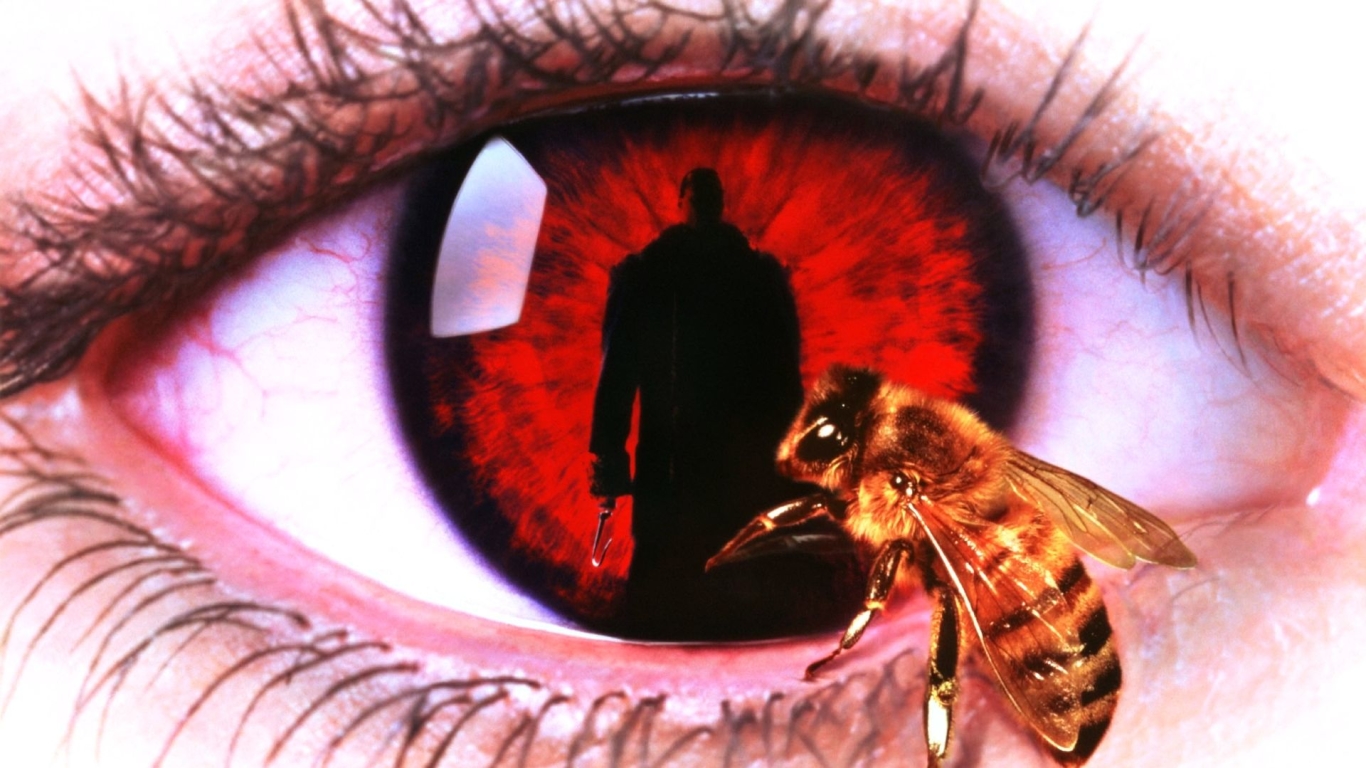
The case, in one place
Candyman does not exist. He is an urban legend stitched together from a dozen contradictory stories, and the movie quietly tells you so: aside from the very last shot, nothing supernatural actually happens on screen. What does happen is that a real, mortal man in Cabrini-Green has been killing people with a hook and calling himself Candyman. The police have hunted him for a long time, and the detective tells Helen flatly that there is no question this man did it. Then that man ambushes Helen in a public restroom and beats her half to death, and something in her breaks.
From the concussion onward Helen loses time, freezes in place, and slips into trances. And one by one, the people who have recently slighted her start dying. A dog that barked at her. A baby she confessed she would love to have. The best friend who spent the whole film telling her to stop. The psychiatrist who showed her proof she was insane. Her cheating husband. Look at that list: every victim is defenseless, and every victim is someone Helen could walk right up to. Candyman only ever moves her to places she could have reached on her own two feet, and the one man she has real reason to kill, the impostor who assaulted her, she never touches, because by then he is locked in a police cell and out of her reach.
The film plants the answer everywhere. The opening line of the movie is Candyman promising 'they will say I have shed innocent blood.' Her husband's very first lecture lists why urban legends persist, and the odd one out on the chalkboard is 'a victim seeking revenge.' In a parking garage she is hypnotized and sees flash after flash, not of Candyman's face, but of her own. Candyman himself tells her, 'you were not content with the stories, so I was obliged to come.' She wanted him to be real, so she made him real by becoming him.
At the end she burns in the Cabrini-Green bonfire and dies, and the neighborhood plants a hook on her grave. Not out of love. They are burying Candyman, because they know exactly what she became. There never was a Candyman. There was only Helen, and the legend she pinned to her own back.
The evidence
A Killer Who Makes No Sense
Hand sawed off, honey, bees, a hook he never had.
Too many legends in one man
Line up everything Candyman is supposed to be. An 1800s man whose hand was sawed off, who was smeared in stolen honeycomb and stung to death, then burned. A modern ghost you summon by saying his name five times in a mirror. A hook-handed slasher, even though the historical man never had a hook. He comes through the hole behind your medicine cabinet, kills in bathrooms, hides razor blades in candy, covers the projects in graffiti, and possesses people. No single creature is all of those things at once. That is not a monster, it is a scrapbook. Candyman is a heap of unrelated urban legends wearing one name, which is exactly what an urban legend is: a story with no author and no body behind it.
Built From Two Older Boogeymen
Bloody Mary plus the Hook Man, welded together.
The author admits the recipe
This is not an accident of the plot, it is how the character was made. Author Clive Barker fused two of the most common American urban legends into one: Bloody Mary, the face you summon in a mirror, and the Hook Man, the killer with a hook for a hand. A being assembled out of spare legends in the real world is a being with no fixed truth inside the movie either. He was always a story people tell, never a man who lived.
It Was Always You, Helen
The shrine spells out the whole theory in spray paint.
The wall names the killer
Candyman leads Helen to a candlelit shrine, and painted across it in huge letters is IT WAS ALWAYS YOU, HELEN. On the surface it is the ghost telling her he chose her. Read it as the film talking past the ghost, straight to you, and it is a confession: it was always Helen. Every horror in this movie traces back to one person standing in that room, and the wall says her name out loud.
There Really Was a Man With a Hook
Flesh and blood, arrested, no magic required.
A mortal killer wearing the name
A real man in Cabrini-Green had been coming through bathroom walls and murdering people with a hook, telling everyone he was Candyman. He may even have spread the newer legends himself so no one would dare testify against him. When Helen asks the detective whether this is the man who did the killings, the answer is that there is no question, they know everything about him, he was Candyman. The police have been building the case for a long time. So the 'supernatural' murders of Cabrini-Green already have a solution, and it is a man in handcuffs.
One Blow to the Head
He ambushes her, and afterward she is never the same.
The exact moment she snaps
That same impostor ambushes Helen in a public restroom and beats her savagely, leaving her concussed and bruised over one eye. This is the hinge of the entire movie. Before the blow, Helen catches only fleeting glimpses of graffiti. After it, she loses chunks of time, freezes so she cannot move or speak, and falls into trances where she is plainly not driving her own body. She does not truly see Candyman until this concussion scrambles her head. Head trauma is where the killer is born.
The Flashes Are Her Own Face
Hypnotized in the garage, she sees herself, over and over.
The movie shows you who Candyman is
Right after Helen learns the killer is only a mortal man, Candyman corners her in a parking garage and hypnotizes her for the first time. The scene cuts in a burst of flash frames. The first is the graffiti Candyman face. Every flash after that is Helen's own face, again and again. The film is not being subtle. When it wants to show you the true face behind Candyman, it shows you Helen. And his line to her lands like a thesis statement: 'you were not content with the stories, so I was obliged to come.' She wanted him to be more than a story, so she became him.
She Only Kills Who She Can Reach
Every victim is defenseless, and every one wronged her.
The tell that unmasks her
Run the list of the dead and a pattern snaps into focus. A dog, a baby, a best friend, a restrained psychiatrist, a husband. Not one of them can fight back, and not one of them is more than a walk away from Helen. If Candyman were a magic being killing whoever Helen hated, he would have gutted the man who assaulted her. Instead 'Candyman' only ever moves her to places she could have reached herself, and only ever kills people she could have overpowered herself. That is not a ghost's kill list. That is a concussed woman's.
The Dog That Barked at Her
A clean cut from a meat cleaver, not a hook.
The first kill already fits Helen
The first thing 'Candyman' kills is a dog that barked at Helen, in the apartment where a baby lives. The wound is a clean slice, and Helen is holding a meat cleaver, not a hook. Read plainly, she kills the dog in self-defense while she is there to take the child. The very first murder already does not match Candyman's hook, and it does match the blade in Helen's own hand.
The Baby She Said She Wanted
'You got kids?' 'No, but I'd love one.'
The strongest objection, turned inside out
Anne-Marie asks Helen if she has children, and Helen answers no, but she would love one. A short while later a baby is stolen. In her dissociated, time-losing state, Helen takes the last child she was near, the one she just told a stranger she longed for. And here is the beat everyone calls proof that Candyman is real: the baby is still alive a month later, while Helen sits drugged in a cell. The simpler answer is that Helen never had the baby at the end at all. The mother had it the whole time, and a broken Helen only imagines the rescue that lets her be the hero instead of the kidnapper.
The Bloody Kitchen Knife
Her neck is cleanly sliced. So why is HER knife bloody?
The knife she should never be holding
Bernadette walks in, gasps at something we are never shown, and dies. When the police arrive, Helen is lying there, alive, a neat slice on her neck, holding a bloody kitchen knife. Nothing explains the blood on that knife. She last picked it up clean to defend herself, and her arm is nowhere near her own wound. The blood is on the knife because Helen used it: on her own neck to sell the attack, and on Bernadette. And Bernadette's body is buried under the photo slides she had just handed Helen, the friend's one contribution to a thesis Helen was obsessed with and Bernadette kept begging her to drop. The friend who spent the whole movie saying stop, silenced with her own slides thrown on top of her.
Killed the Instant He Proved Her Insane
Not when he doubts her. When he is right.
The timing gives her away
Dr. Burke is the one kill that really looks like a hook did it, and the one Helen supposedly could not have done, cuffed to a chair. But watch the timing. She does not kill him when he questions her. She kills him the moment he plays her the tape that proves there was no Candyman on the footage, that she was alone, that she is insane. He has just torn down every wall protecting her from what she has done. The very first thing she said walking in was to ask whether the restraints were really necessary, and he was there for her defense, not the hospital's. Loosen those cuffs on her slender wrists, hand her a shard from the window she breaks moments later, and the impossible kill becomes a desperate one.
The One Man She Never Killed
Her worst enemy walks away untouched. Because she can't reach him.
The murder that is missing
If this were a revenge spirit, the very first man to die would be the impostor who caved in Helen's skull. He is the person she has the most reason to destroy. He never gets a scratch. Why? Because right after the beating Helen is far too injured to take him on, and immediately after that he is in police custody, behind bars, out of her reach. A magic Candyman could have killed him anywhere, in any cell. Helen could not get to him, so he lives. The absence of this one obvious murder is one of the loudest clues in the film.
A Victim Seeking Revenge
It's written on the board in the very first scene.
The odd line out
In the opening lecture, Trevor chalks up why urban legends take hold: a grain of truth, a warning to keep children out of dangerous places, deformity, and then one entry that does not sit with the others: 'often a victim seeking revenge.' That is Helen's whole arc in a single line, planted before a single murder. She is the victim, assaulted and humiliated, and the killing spree that follows is revenge she is too broken to admit she is taking.
The Husband Gets the Worst of It
The one she has the most reason to hate, dead at the end.
Revenge saved for last
People ask why 'Candyman' never touches Trevor or the student he cheats with. He does. Trevor dies at the very end, in the bathroom of his own home. And nobody on the board earned it more in Helen's eyes: he broke his promise and stole her thesis for his own lecture, he leapt on her drunk in the night to scare her, and he abandoned her the night she was arrested, for his new girlfriend Stacy. When Helen comes home to that house, she takes her revenge on the man who slighted her first and worst. The legend she leaves behind is the one Trevor cannot stop poking at, right up until it takes him too.
Mr. Punch, Who Killed His Wife and Child
An odd little puppet hanging in Helen's bathroom.
A puppet that foreshadows the body count
Hanging on Helen's bathroom wall, right beside the hole she loves to show off behind the medicine cabinet, is a mask of Mr. Punch from Punch and Judy. Mr. Punch is famous for one thing: he murders his wife and their baby. Helen is a woman who kills her husband and nearly claims a mother's child as her own. A Punch and Judy mask is a strange thing to hang in a horror film, unless someone in the art department knew exactly which story they were foreshadowing.
She Doesn't Beat Candyman. She Becomes Him.
Burned in the bonfire, buried under a hook.
One person, one grave
Helen dies in the Cabrini-Green bonfire. Then the whole neighborhood turns out to plant a hook on her grave. The movie frames it like mourning, but read it straight: they were burning an effigy of Candyman when Helen rose out of the flames, so now they know who Candyman really is, and they are burying the legend with her. When even her cheating husband ends up dead by her hand from beyond the grave, the message is complete. Helen and Candyman die together because they were always one person. There was never a Candyman to outlive her.
They Will Say I Have Shed Innocent Blood
The movie's very first line tells you the victims look innocent.
The whole theory, said out loud, first
Before a single image, Candyman narrates: 'they will say I have shed innocent blood.' Every person Helen kills will look technically innocent: a barking dog, a helpful friend, a doctor doing his job. And 'they will say' points the finger too. They will say Candyman did it, when it was Helen all along. The first line of the film is the entire theory, delivered as a promise.
She Climbs Out of His Mouth
Born from Candyman's head, as he'll be born from hers.
The most deliberate image in the film
In the abandoned tower Helen finds a giant mural of Candyman and climbs bodily out through the gaping mouth painted on the wall. It is the least accidental shot in the movie. She is born out of Candyman's head, right before Candyman will be born out of hers. The film draws you a picture and dares you to miss it: these two come from the same place.
A Photo That Can't Exist
She refocuses a picture after it was taken. Cameras don't do that.
The evidence only she can see
Helen photographs the graffiti by the store, including the word SWEETS, and a flash of Candyman's painted face cuts in even here, before her concussion, while she is already obsessed. Later she alone looks at the developed slides, no one ever watches her friend view them, and she alone spots Candyman lurking in the background. Then she refocuses the projected photo to pull him into focus, which no camera or projector can do, because focus is locked the instant the shutter closes. What she is looking at is not on the film. It is in her head, and some part of her knows it, which is why she never shows the 'proof' to a single other soul.
It All Equals One
A whole blackboard of variables, and the answer is 1.
Nothing is in frame by accident
Behind Helen as she first hears the Candyman story sits a blackboard covered in a long, tangled equation. She does not study math, so why is it there? Because for all its variables, the whole thing resolves to a single value: one. Strip away every version of the legend, every contradictory story, and it reduces to one person. Just Helen. On a film set, a filmmaker will black out a stray white magnet rather than let it mean something. Whatever ends up on that board ended up there on purpose.
Jordan Peele Kept the Five
The Get Out director's follow-up still makes you say it five times.
A strange number that survived thirty years
Everyone agrees five is a strange number of times to say a name in a mirror. Most legends stop at three, because audiences stop counting after three. Yet when Jordan Peele produced his 2021 continuation of Candyman, he kept the count at exactly five. Whether it is reverence or a sly joke about how nobody in the theater is really keeping track, the number survived a thirty-year jump and a whole new creative team.
The Best Friend From Silence of the Lambs
Kasi Lemmons played sidekick to two doomed heroines in a row.
Why it feels like Silence of the Lambs
When people say Candyman feels a little like Silence of the Lambs whenever the blood is off screen, there is a hard reason for the deja vu. The year before, Kasi Lemmons played Jodie Foster's best friend and fellow trainee in Silence of the Lambs. Here she plays Bernadette, best friend to Virginia Madsen's Helen. Same actress, same slot in the story, one film later.
Episode transcript
Hello and welcome to The Popcorn Isn't Real, a podcast where we talk about all things conspiracy theories regarding film and other media. I'm Leif Eric and I'm here with my brother Torvald and today we're going to be talking about Candyman. So Candyman, it's from 1992? Yes, 1992's Candyman, written and directed by Bernard Rose. So this is a film about a crazy ghost or slasher named Candyman who kills people with his hook hand. And he kind of starts haunting this woman named Helen and making it seem like she's a murderer, right? Yes. My theory is that Helen actually goes crazy midway through the movie after receiving a concussion to the head from a man who was pretending to be Candyman. And during the resulting insanity, she subconsciously pretends to be Candyman, as well as exacting revenge on all the people who had recently slighted her. Now, one caveat to this theory is that this is a movie where there are two different possibilities.
Either Candyman is real or Candyman is fake. And the movie is clear about this. Well, I was going to ask you, like, how does your theory deviate from the movie in any way? or does it like i think that in a way it doesn't i think that it's all spelled out there in the movie right like that's what the movie about is about that's the question of the movie is is she crazy or is she not crazy but i think that most people get to the end of the movie and kind of come away thinking she's not crazy right there was something supernatural going on here candy man comes back in the end she gets buried she's dead she comes back that's supernatural she's a ghost well and i would say that candy man is often just like listed as one of those like uh one of the slashers you know he's not necessarily as famous as jason or freddie or michael myers or chucky or whatever right but he is often listed as one of those big name uh horror
dudes well can i stop you here because that's actually something i wanted to ask you about so this movie came out in 1992 um which i for me i don't know if you'd agree but for me the 90s is like prime time for slashers right yeah that was like it was shortly before their huge resurgence in 1996 but yeah so it's like four years before screen we got yeah no you had i know what you did last summer yeah there was just a huge resurgence of slashers is this movie part of that movement to you like do you count candyman as a slasher movie is he a slasher like you said he might be less popular than them than you know the big name slashers so is he one of them i think it's coming in at the tail end of the heyday of the 80s slashers. But I don't think that it was trying to be a slasher. I think that it was trying to be a psychological horror. And what happened was that because it was the 90s coming out of the 80s, they just threw a whole lot of special effects
blood over everything and made everything really gory. Like a lot of times psychological horrors are more elevated, like they're kind of considered more high art and slashers are not. And I think because they poured so much kind of like gory cheesy blood on this movie it got downgraded to slasher in a lot of people's eyes but i don't think that's what it was trying to be how do you feel personally though do you feel that that downgraded it or do you think that that suited it i kind of feel like maybe the blood is a bit much but i honestly like it never occurred to me it was just when i was like kind of reading on wikipedia about how this film was received that there were a lot of people who kind of didn't like it and thought of it as more just like a b-movie slasher horror with tons of blood the movie and that's not definitely not what i thought when i first watched it i thought hey this is a pretty cool uh psychological horror well the reason i saw
the movie candyman was because i was trying to watch all the slashers and i noticed that on many sites like candyman was getting listed as one of them and so that's why i watched the movie but i i actually thought it was interesting because i noticed that it was almost like a psychological horror but i thought the fact that it was a psychological horror with a slasher in it i thought that improved it like i thought that was really cool it added a certain like menacing touch to it that so he's not just all in your head he keeps coming back like he's a slasher like he'll always be there to mess stuff up whether it's psychological or not i thought it was kind of cool and i do like candy man like i think tony todd the actor is awesome i think he's just got a really cool voice good he's just like so deep voice really menacing his character design i think is really good he's just like weird fur coat that he wears even though he was killed like
down in the south or something yep and then he always takes it off and he's just a rib cage and his hook hand is kind of interesting in that it was just like clive barker actually just decided to make his own little story about an urban legend so he just combined bloody mary and hook man which are two very popular urban legends how does clive barker factor in here how is he involved this movie was based on a short story written by clive barker but the film itself was written and directed by bernard rose right and clive barker he's a prolific horror author right right yeah he's famous for a great number of horror franchises most notably hellraiser is like his most uh right long running film franchise at least I know Clive Barker from Clive Barker's Jericho yes I know him from Clive Barker's Jericho I know him from video games first and foremost now I've never played Clive Barker's Jericho but I always thought it had a pretty sweet name
Clive Barker's Jericho he feels to me more like a heavy-handed Stephen King like an in-your-face stephen king yeah well yeah he likes more gore he likes monsters he kind of likes weird devices and stuff like that we'll talk about him more when we do our hellraiser episode yeah that's gonna be fun well today we're talking about candy man i i really liked this movie i thought it was weird i'd never heard of it before you told me about it and that was weird because it was a good movie like i thought as a slasher it works as a psychological horror it works the acting was great like yeah there was nothing about it i didn't like it didn't even feel like super old to me it actually like when i mean when candy man's not around and there's not tons of blood it feels kind of like silence of the lambs yeah yeah i can see what you're saying kind of i think a lot of people might be offended by that comparison i mean i i think that it is an
apt comparison because silence of the lambs featured jodie foster and her best friend was casey lemons and in this we've got virginia madsen and her best friend is casey lemons so there is that comparison that makes it feel similar yeah i mean i thought i thought it was a really good movie and i really enjoyed it and it surprised me that i'd never heard of it that was mostly what i came away from it yeah i was just like why have i never heard of this this is good yeah the first time i watched it i was just like this is cool like it feels cool it's not i don't like despite what we were talking about the gore like i don't think it actually is super in your face it's kind of a fun little psychological horror it's got this awesome candy man guy in it and it's kind of open-ended a little ambiguous and it also like the score for this movie is awesome the composer was named philip glass and just the main theme for this movie is just so
great like just so haunting and and awesome i think the gore of this movie was pretty in your face like there is there's a lot of blood there was there was a dog's head ripped off there was like b make out sessions like i don't know right yeah what i mean is to me it never felt like a cheesy campy 80s slasher really like even the dog head like when i first saw that like sure you can kind of tell it's fake but like it looks kind of like a real dog head and that was a very disturbing image the first time I watched it it wasn't like army of darkness gore in your face no Sam Raimi not it wasn't Sam Raimi although Ted Raimi is in it well that's quite the connection dude let's get into your theory so why do you feel that this is the definitive the true interpretation of the movie that she went crazy and started killing people well I just think it's supported by her character and the journey of her character, like the journey that she goes on
throughout this. I think that they drop hints throughout, and I think that they're very subtle, but I do think that they're there. So at the beginning, Helen is a graduate student who is writing her thesis about urban legends. She is married to Trevor Lyle, who is a professor at this university in chicago so she's doing her thesis is she a student at trevor's university i wasn't sure about that yes i don't know if she's working on her master's or her phd but the way she like rubs shoulders with like her husband and this this purcell guy i don't know if you remember him makes it feel like she's more like a phd candidate no i agree with that but what struck me as odd was that she comes into her husband's lecture and he's lecturing on urban legends and then afterwards she you know walks up to him all angry and she's like how dare you give a lecture that overlaps with my thesis and he's like i gotta follow the curriculum honey
like why did she expect him to revise the school's curriculum just to not overlap with her thesis like that confused me what's what's going on what's wrong with her but professors at universities they have the freedom to be able to plan out how and when they teach their curriculum. And when she comes in, she says, you promised you wouldn't do this until next semester. So she wasn't asking him to not do it. She was asking him to wait until after she did her thesis. To me, it seems like her husband is basically just stealing her research and taking it and just using it as a lecture before she even had a chance to actually turn in her thesis paper. Okay, so you think it's an instance of she wants to be credited for it. Like she wants when he says this, she wants him to cite her and he can't do that because she doesn't want him to break it, you know, to be the one who premieres it or whatever you call it.
Right. Like this is her story. Right. So she is doing this research and he, you know, as as a married couple, they are talking and sharing and he's learning her research and he immediately takes it and inserts it into his course without her permission. Exactly. And as she said, she tells him that he broke his promise, meaning he had they had talked about it. Right. He had promised not to do it this semester. Right. She's researching a specific urban legend called Candyman. And she ends up getting led by different people who she interviews to Cabrini Green, which is this a real area in Chicago that's not the safest place to be walking around. You say Candyman's name five times in a mirror, which I just think, why five times? That's so stupid. I mean, just from a film standpoint, that's so stupid. Because like by the time they get to four, anyone watching is just like, wait, how many, I think, did she say it five times yet?
Like people don't count higher than three. Like I know that they wanted to make it a little different than Bloody Mary, but like five is just dumb. And even in Jordan Peele, the guy who made Get Out, he's doing a remake of it that's actually going to come out soon. he kept it five times right and i maybe he's gonna use that as a joke because jordan feels movies are a little more funny um but i just think it's like it was a prime time man for you to cut out two of those candy mans and make this movie just a little faster and a little less confusing why they have to say candy man candy man candy man candy like it just gets awkward by the time they're up to four right like right especially at the end where he like accidentally says helen five times in front of the mirror it's like dude why are you saying helen still you already said it so many times stop saying like we weren't counting whereas like you know in like that uh episode of
supernatural with with bloody mary like you know like bloody mary bloody mary it's like oh no they're gonna say it the third time whereas in this when she says candy man candy man candy man candy man you're like and then she pauses you're like oh she's stopping because she said it five times right you don't feel the tension because she actually only said it four times and she's waiting to like you know build tension but you weren't counting so you don't know and then she says that you're like oh oh that was the fifth time right so any aspiring writers or directors out there take note viewers can't count no we don't count at least they can't count past three anyway the urban legend is that if you say his name five times in a mirror he shows up and kills you with a hook right and uh she does joking with her friend bernadette say it five times in a mirror and then she goes to cabrini green eventually she gets uh beaten up by a man who who is real
who is not supernatural who claims to be candy man who has a hook and who the police confirm did murder people in that apartment building and the police capture this guy she starts seeing Candyman after that she wakes up in a pool of blood and someone has murdered this woman's dog and this woman's baby is missing and the police think she did it and she's arrested and then she gets out on bail and then Candyman shows up and kills her best friend and the police thinks she did it again and she's committed to an insane asylum she gets out and she ends up saving the baby that's missing and confronting candy man and ends up kind of killing herself in the process of trying to save this baby and then uh at the end it's like oh now she's candy man like she's been brought back it's a ghost kind of thing as i was saying though i think that there are little hints thrown throughout that candy man does not exist that she is candy man right one of the little
hints i think for this theory is that at the very beginning when she goes into her husband's class he has a bunch of things on the blackboard that are listing why do urban legends exist or something like that and the reasons are things like some basis of truth resides in forbidden areas to keep children away and then one is like deformities appliances but then there's one that i think kind of doesn't fit with the other which is often a victim seeking revenge and i think that's kind of a small little hint that this is what helen ends up doing after she ends up getting this head trauma i think she goes crazy but every person she kills i think she's seeking a small amount of revenge for all right i have some questions about the revenge that she was getting on the different victims and i'm gonna go through each victim and i want you to tell me because i've got some questions but first of all candy man seems to be very multifaceted you might even say convoluted
yep sir well right along with his saying his name five times the name candy man sucks right so the name candy man what does he have to do with candy literally nothing except he was covered in honey he was covered in honey right so it's like a candied apple how you cover it in candy man's origins from the 1800s he gets his hand sawed off he never gets a hook he gets his hand sawed off he's covered in honeycomb and then he's burned like these are three very very disparate things like yeah he gets his hands thought off covered in honey killed by bees and then his body is burned yeah okay so he is actually killed by bees and then burned so being burned didn't kill him all right nowadays candy man's still around he appears when you say his name in a mirror five times he typically comes through a hole behind your cabinet in your right in your bathroom that's where he likes to come from he has a hook hand even though he never got a hook hand
when he was originally killed he sometimes kills you with bees or has bees present when he kills you now like in this movie did he kill anyone with bees i don't think he did kill anyone with bees in this movie okay because i know in the sequel he does kill people with bees but in this movie he does not okay i haven't seen any of the sequels by the way we're not going to talk about them they're honestly not really worth seeing so okay continuing with candy man a lot of the times he kills you in bathrooms but not always but he likes to kill you in bathrooms he mostly kills you with hooks sometimes he and correct me if i'm wrong but i think they alluded to he chops off your genitals yes puts them in the toilet um he also hides blades in candy but doesn't give it to anyone he just puts it in his room and he graffitis a lot and he possesses people right that's about everything i can gather about candy no no this is a huge conglomeration of a
bunch of different random ideas the reason why because candy man's not real right right like aside from the very end of this movie there's actually nothing supernatural that happens right there are a lot of different ideas here and i think that's the point of the movie is that there were it's an urban legend that has come together from a whole ton of different stories some of them true some of them not like maybe there was a man who was killed by bees and his hand chopped off because he had an affair with this rich person's daughter you know um in the 1800s right you know and maybe that that story had circulated but then a lot of the other things never had a hook attached to him right so that right later is what exactly like and the hook thing like candy man is not real is what you're saying like he is nothing he is right yeah he is completely fictional well and the hook thing i think came about and also killing people in
bathrooms all that all that stuff came about because there was literally a man in cabrini green who was coming through bathroom windows and was killing people with a hook right and they arrest that man so i think except the one murder that seems most linked to that man was the killing in the outdoor bathroom outside of the store yes which did not have a hole to come through Right. But when she talks to the detective, when she asks, is this the man who killed, who murdered those people? He says, there's no question. This guy killed everyone. He was Candyman and we know everything about him. Like they've been investigating this guy for a while. So I think that's kind of why we can believe him because this is his job. He's been investigating him. Presumably they have evidence, although we don't get into that. right so candy man is a conglomeration of legends the living person who is imitating candy man
his actions were being attributed to the legend that's what you're saying yes and i think that he probably that was in his favor like he may have even spread the legends himself like the new parts because he didn't want people to testify against him or whatever so the very first victim of you would say helen as candy man right like that's your theory was the dog the dog yeah what did the dog do to her i mean it barked at her yeah the dog barked at her dude she hated that dog no i think that as nice and sweet as helen was i think that candy man in a way was born to do what she couldn't do like i think it's a facet of her personality and whether he's getting revenge or he's protecting her I don't necessarily think what he does there might not be a trackable motive because Helen herself had head trauma right that's what started this whole thing all the murders right like she's crazy so something is going on in her head she's
losing time she has moments where she can't move just inexplicably she can't move there are other times where she seems completely hypnotized like her head's not working correctly so i think that it was enough that this dog barked at her that in her weird dissociated state she would go and kill the dog because there's this part of her now that's trying to protect her and trying to kill things that had slighted her in the past maybe the fear that that dog put into her was really deep-seated and she needed to overcome it by killing that dog or you know subconsciously that was how she felt yeah it's protecting her it's doing the things that she wants maybe getting revenge things that she wouldn't consciously do and i think the reason that it goes after ann marie mccoy maybe i mean the dog may have scared her but i think that the main reason was to kidnap the child right right okay so what did the baby do to her like why was she mad at the baby okay so the
baby doesn't do anything to her but ann marie mccoy says to her you got kids helen is like no but i'd love one so and then she goes and she steals that kid right like like subconsciously she wanted a kid and then in her weird state of just head trauma and she's dissociated she's losing time she goes and she gets the last kid that she remembered right okay and then in that case if her purpose there was to steal the kid killing the dog could have been self-defense right yeah exactly not trying to say she wasn't a criminal i'm not trying to justify her actions I'm just saying that maybe she killed the dog to protect herself. I want to talk about her other victims, but first I need to talk about this baby. So in the movie, she is captured by police after a few murders and she is kept drugged up for a month. How is this baby still alive and who's taking care of it? Yeah. So, I mean, you're getting to one of the main things that will try to disprove this theory.
and that is definitely one of the things the strongest evidence that candy man is real is the fact that this baby is still alive after a month and so my theory with that how did the so how did the child survive one month there are a couple different ways that this could have happened all right so one thing is that she has a flashback early on of where the baby is right yeah she knows where it is she knows exactly where it is she's in that abandoned apartment where she was like she's been there and then but when she finds the baby it's actually not there where's the baby it's in the bonfire so clearly she's been moving it around right without knowing another possibility is that and we'll get to the candy so uh sorry i had actually been wanting to talk about this because you had mentioned candy man puts razor blades in candy now that was an interesting interpretation i had never thought of it that way i had always thought that the kids who live in
cabrini green and believe in candy man were the ones putting the razor blade candy there like maybe on this weird sort of warp belief that his name is candy man he must want or eat candy and also maybe we're going to hurt him a little because he's a monster so we put raiders razor blades in it well i don't think most people would interpret it like that well so you thought that candy man put that candy there why because it's a it is a very common urban legend that some bad well yeah no i know that razor blades in candy and then give them out candy man is a conglomeration of urban legends he's a bad guy he puts razor blades in candy that's what bad urban legend guys do right okay so well i mean it doesn't really matter who put the candy there but the point is candy man doesn't exist and someone is putting candy there and this is where the baby was stored maybe they did tell someone about the baby when she's first arrested they're asking a lot where's the baby
where's the baby where's the baby but then after she spends a month in that place no one ever mentions the baby again to her right like she goes and finds the baby but i think maybe she didn't go and find the baby i think maybe they found the baby i mean if it was in that apartment and it was crying it wouldn't take long to find that baby right like she went into that apartment just on her own with bernadette just climbing through the wall you know and there was no screaming baby then right it would be very easy to find i think that the entire ending where she saves the baby i don't think that happens because i don't think that baby could have survived being in a bonfire like she doesn't survive being in that bonfire you know and like presumably she's protecting it from the baby right like she's protecting it from from heat with her own body you know like like like i don't think your arms are going to protect a baby from extreme heat on all sides for very long humans are like
what 80% water and water doesn't immediately conduct heat like right away water needs to heat up so I think having a you know a couple of bodies on top of you in between you and massive heat I think that would act as a good barrier maybe that could help a little I still think that baby would have died like she was really burned it would have inhaled a lot of smoke I don't think that that ending scene happens I think that she imagines the scene where she saves the baby and gives it back to ann marie mccoy i think that ann marie mccoy already had that baby i think she climbs out of the fire and looks at ann marie mccoy who has the baby and just imagines that she saved the baby i think that someone else already found it all right so i i'm so you think that scene happened in that she died in that fire but there was no baby there it was in ann marie's arms the whole time right and possibly she didn't even climb out of the fire as we saw it because jake sees a body
in the flame right that could you know that's probably her maybe she didn't even climb out maybe helen just didn't get out climbed out because the whole crowd went and put a hook on her grave afterwards right like they recognized her as the candy man but that doesn't necessarily mean that she climbed out you know like people were probably she must have though to make that impression on them like they were burning candy man they see her climb out boom yeah she's candy sure she could have climbed out i think it must have but even like her body in the fire might have you know been like oh she was candy man because we were burning this fire for candy man you know but like it doesn't really matter whether she climbed out or not my point was just that that the ending that ending sequence i don't think really happened that way okay what it means is that at the end when everyone from cabrini green shows up at her funeral it's not an act of love
as the film kind of portrays it it's just them like recognizing she was evil candy man we're giving her a hook and we're leaving it's like we've come to dance on her grave kind of thing like yeah not not like happy but like we recognize that this evil thing is dead right right yeah we'll bury candy man's legend with her oh no until trevor brings it back right which again i do think is another hint that they were the same person right she's buried with candy man in a way right Like she dies as does Candyman. And then the end of the movie, despite what the sequels may say, implies that she is now Candyman, implying that there really never was a Candyman to begin with. Yeah, I get that. Implying that Candyman was fictional all along and he is an urban legend that will continue to evolve and grow and change. And also Candyman's own dialogue in the movie supports that when he's telling her like,
we won't die, we'll live on in the words and the graffiti. I also just want to say that when this movie, we were talking about her reasons for killing people, When this movie opens, I think the very first line we hear is Candyman narrating saying, they will say I have shed innocent blood. And I think that's just a hint that all the people who she kills are going to seem technically innocent, right? Also, they will say that he did it. Really, she did it. Yeah. Yeah, no, I actually like that. That's pretty good. Because, I mean, he does say it with the inflection of like, they'll say this, but they're wrong. Right. And it's the very first line of the movie. So she killed her best friend, Bernadette. Yes. Why did she kill Bernadette? Bernadette was nothing but nice to her. Bernadette didn't wrong her in any way. Here's the thing with Bernadette. Are they that good of friends? And by that, I mean every single thing that Helen does in this movie,
Bernadette is always there to say, no, that's stupid. This is crazy. Let's get out of here. Stop what you're doing. She is constantly an antagonistic force to Helen. She's an anchor. She's holding her down. Exactly. Helen's obsession is originally with her thesis and with Candyman. And she feels so strongly about this. She doesn't even want her husband to talk about it. And yet she's got Bernadette, who she's working with here, who's constantly holding her back from doing the thing that she's obsessing over. And interesting to note, when Bernadette comes into the apartment, we don't see what Bernadette sees. She just looks forward and gasps and then it cuts. And then later we see the husband come home or something. I forget exactly. But Helen has just been laying there like awake the whole time. She didn't even like pass out this time. She's just like paralyzed, I guess. Yeah, she just can't move, can barely talk.
Yeah. And so a few interesting things to note in this scene. She's bloody, presumably because Candyman cut her neck with a hook. But if you look at the cut on her neck, it's a very clean slice. And she's holding a kitchen knife, which is bloody. Now, there's no reason for that knife to be bloody. Like when people actually arrive there and she's just laying there, her knife is bloody. Now, the last time we saw that knife, she picks it up to defend herself from Candyman. It's not bloody. And then when we see her, there's blood on her neck from where Candyman hit her, but her arm is nowhere near her neck. So why is the knife covered in blood? Well, I think not only did she maybe cut herself with the knife on her neck, but she used it to kill Bernadette. Otherwise, what reason does that knife have to be bloody? So you think that she wanted to fight Candyman and because she's Candyman, she stabbed herself in the neck.
Yes. And then she killed Bernadette. And then killed Bernadette. Right, because the Candyman half of her personality clearly won that altercation. Another interesting thing to note in this scene is that when they show Bernadette's body after the police arrive, we don't ever see how Bernadette got killed, but Bernadette is covered with bloody photo slides. The slides that she had given Helen in the previous scene, and Helen had been kind of looking through them. why did she do that? And I think it has something to do with her subconscious. Like they were working on this thesis together, but she was holding me back. So I got rid of her and here's the slides you gave me, your part, your, your only contribution to this thesis. Literally the only thing Bernadette ever contributed was no, let's not do it, you know? All right. So you think Bernadette walked in on Helen trying to kill herself, was real scared and then got killed yeah and then helen laid on the floor until the police arrived
probably you know because she was bleeding a lot yeah okay or even it could just have to do with her weird head trauma like sometimes she may not be able to control her motor functions and also it could have to do with guilt even like she she feels this guilt so she's just paralyzed with guilt okay but also rage because she hated bernadette for holding her back well i mean like i said a lot of this is is very deep deeply buried in her subconscious stuff okay my one thing to note there is you said were they that good of friends they were that good of friends bernadette followed her into the depths of that ghetto bernadette was certainly a good friend gang members and angry you know dangerous people like bernadette was she was a true friend bernadette is a great friend i don't want to sell her short i just mean from helen's point of view maybe she felt bernadette was not that good of a friend subconsciously okay i can i can buy it if we're we're going
under the impression that helen is a deeply deeply vindictive person and she loves her thesis oh and she does i mean like so let's look at the scene with purcell right they're just having a nice little chat at dinner no i agree and helen is like actually purcell we're about to bury you And she literally has no reason to say that because as Priscilla points out, no, they're not about to bury him. He knows way more about Candyman than they do. They know next to nothing about Candyman. Also, he was kindly offering to review their thesis. Like that's about the nicest thing any subject matter expert could do for a person who is currently working on a thesis. And I think this gives us like a window into how Helen's mind works. like he is offering to do nice things yet she sees them as this just pompous windbag you know and she threatens to bury him right like she's already thinking about death I mean she doesn't
mean literally bury him but still you know no I mean this this I have to give you like this is true that's how I interpreted the scene I don't see any other way to interpret that scene she loves her thesis she is defensive and aggressive about her thesis and like irrationally so right yeah no i mean she she doesn't like anyone who tries to butt into her thesis now her last victim i think and correct me if i'm wrong her last victim was her psychiatrist right yeah okay how did he wrong her he didn't do he was just doing his job he just sat her down and asked her like three questions we know from the very get-go of that scene that she views their relationship as antagonistic right like she asked him shouldn't i be able to talk to my husband or my lawyer and he tells her i'm with your defense right but like what i don't know that she necessarily internalizes him saying that i think she views their relationship as you're keeping me
here kind of right and you are in my way of escaping and doing what i need to do so i'm going to kill you so is that that's all you have for the second and also well no also he like she kills him when does she kill him she doesn't kill him right away she kills him after he shows her the video that clearly proves there is no candy man right she is literally insane he is threatening everything you know that she all the walls she's put up to protect her own psyche from what she's done existence right exactly she's got to get rid of him right like she has to kill him okay so you're saying he wronged her in that he was an existential threat to her like she was protecting herself from him it makes sense for a lot of these things to be motivated by defense because what caused this was her getting assaulted right and not being able to defend herself yeah no that that also does track okay i need to ask you a few questions how in the world
did she kill the psychiatrist how did she uncuff herself and get out we are touching upon the other main evidence against Candyman not existing right much how in our return to Oz episode the straps proved the existence of of Ozma this would seem to disprove the theory that Helen is the murderer and Candyman doesn't exist now I just re-watched this I looked through that seen a lot yeah find anything no oh no but i knew that when i when i first wrote down this theory months and months ago i knew this would be the biggest hurdle right however i must point out that the very first thing she says to him when she comes in is do you really think these restraints are necessary yeah now it's possible he he's he's with her defense right like he's not one of the hospital's doctors perhaps he didn't think they were necessary okay i don't know but i will grant you burke dr burke uh is his name burke is the most high profile kill in the movie and also the
only murder that we don't really get to see it very much but it seems was done with a hook like yeah well that was gonna be my next question is how did she murder him she had no weapon but first i do want to talk about the dog because that's a good evidence the dog was clearly not killed with a hook it is a clean slice and she has a meat cleaver um and then we already talked about her her scar on her neck and the bloody knife like she wasn't hurt with the hook dr burke like i said it's the most high-profile kill and the most surprising one right candy man just straight up stands up from behind the desk and just kills him now i i feel like this scene for me is what really solidifies candy man is a slasher right this is his this is the only slasher kill like in the movie right and i kind of feel like maybe this was put in for that reason like yeah this is like this is 1992 just coming out of the 80s producers are like he's a slasher right make
candy man kill someone and so like okay he shows up and kills dr burke so in this scene candy man's the one who released her and if we're going with the theory that candy man is her then she must have somehow released herself and also she literally does release herself after that moment like candy man breaks the window but she escapes out the window like she clearly broke the window and escaped and then she climbs down she dresses as a nurse she manages to use the keys to get into the elevator whatever and get out on her own like she literally escapes that hospital by herself except for the part where Candyman releases her but Candyman is her so okay I'm gonna offer you my only justification for your theory in regards to this scene I had two ideas one is that if you look at her when she's struggling to get out of the restraints she has very slender wrists and hands and the restraints look a little loose right they're not tight fitting to her wrists
maybe she slipped her hands out oh well sorry you had asked about the weapon she breaks the glass in the window she could have used a shard of glass to kill him it's possible yes because the window was broken so maybe my other possible justification of what happened here is that the scene gets weird after she sees the video of herself yeah and candy man's not there right like she kind of freaks out withdraws into herself then looks in the mirror and summons candy man this is out of character for her and i thought it was a weird thing for her to do i get that she's desperate but like why does she think she can summon candy man like what's going like this isn't something that she's done before and does she want the psychiatrist to be murdered like what's she doing and like last time she said candy man five times like how long did it take before she saw Candyman like days. Right. I took it to mean that perhaps everything from there on,
she was having kind of like an internal crisis. And that was her mind's way of dealing with the rest of that meeting. He didn't die. She didn't actually kill him. She talked to him. She was wheeled out of there. And then she assaulted the girl who was taking care of her. Right. Because that's the next thing we see is her knocking out this lady who this nurse lady who is taking care of patients right right yeah because you hear people running around the hospital it seems like they're looking for someone it doesn't seem like there's a bloody murdered guy right like it's it's not like quick get paramedics up here call the ambulance it's like quick find her it's true and like that scene like you said is straight up weird like there is no other scene like that. And like I said, no other kill like that in the movie. And like Candyman just stands up from behind the desk and then he just levitates out the window. Like he never does anything like
that in the rest of the movie, which I think, yeah, it could be that the rest of that scene was just totally imagined. Even the part where she says Candyman five times, I think is notable because it's like she is admitting to herself, this is a power that I have, right? I can summon Candyman. It's almost her sort of going toward the idea that he's within me. He's a power that i have that can protect me and help me now that we've talked about all of her victims if she was going around killing people who wronged her why didn't she kill her husband or the girl that he cheated with but she did kill her husband right at the very end right and so that's actually something i wanted to talk about i think she did kill her husband when she came back to his house i think that ending scene happened before the part where she dies because she's dead right i think she showed up at the house and she killed her husband and i know that doesn't quite fit in with
the girlfriend discovering him etc you know i think maybe she came into the house she killed her husband the girlfriend was you know doing the whole thing cooking food like hey what do you want you know and then the girlfriend discovers the body maybe she didn't even have that conversation with her husband and the girlfriend you know maybe she just killed him and left um but then that interferes with the ending because it seemed like in the end they were kind of hinting that either trevor is now crazy or his new girlfriend his new girlfriend and is gonna be the next helen right yeah well that was actually my other theory for this for how trevor dies is true okay maybe everything happened how we saw it maybe helen did not kill him and maybe his girlfriend after having this traumatic experience where helen showed up also went crazy and killed trevor now helen's the urban legend and this new girlfriend had a face-to-face confrontation
with helen and was driven crazy by that and now she kills trevor that's kind of how i took it but that's a that's a little much though like yeah that's the problem is that stacy didn't get any head trauma like no a lot of helen's psychosis can be explained with like you know she did suffer her brain damage dude that's our favorite way to explain bad writing she got hit on the head exactly like you you just threw a lot of stuff at me but the one that you like most is that she killed him when she went home right because like out of everyone he is the one who she has the most reason to want revenge for right yeah exactly not only did he like kill him like he broke his promise at the beginning we already talked about that but also like she's pretty jealous of stacy to begin with uh-huh yeah like you're rationally jealous you know i mean clearly she her jealousy was founded but like in the moment it didn't seem like stacy did anything she was just talking to
her teacher oh she was blushing from head to toe whatever she says um also like the second time we see trevor he just like leaps on her in her sleep and he's coming home drunk drunk in the middle of night chumps on her but like he was trying to scare her i don't know what's wrong and he doesn't help her when she needs him the most at like 3 a.m when she's arrested he's and i thought this was kind of cool she calls him we see the room empty and i was like that's in her head like that's what she is no he totally could have been fast asleep maybe he was fast asleep it was 4 a.m when she shows up while they're painting the house maybe she shows up maybe stacy wasn't even there right that's what she imagined was happening at her house and then she killed trevor killed him and then maybe stacy actually did come over later because she's a graduate student and found trevor in the bathroom i don't know cool now the last person that i want to ask about who i thought was
even more of a potential victim than trevor was the man who assaulted her why didn't she kill him he should have been the very first person that she killed if this is some sort of like right revenge psychological horror yeah but again as we've talked about the first time we see her after she's assaulted she has just a massive like bruise over her eye right like she's beat up bad shape she's in no condition to take this guy on right after the assault is what i'm saying and then after that he's in police custody right like how is she gonna get him you know like he's arrested so i think that's why she doesn't kill him like she has literally no way to get him and if candy man was real if he was a mythical creature that could you know right use magic powers and if he was killing people that she hated right then he could have why yeah why wouldn't he have more proof that he wasn't real this is all in her head yeah he could
have teleported her into that guy's gel cell and then she'd be covered in blood there instead of at ann marie mccoy's house you know right exactly she only he only teleported her to places she could have gotten to by herself right and the only people she kills in this movie are completely defenseless right these defenseless people like her best friend who came to visit her right i mean except for the psychologist i guess like i guess the dog isn't totally defenseless but you know it's a dog it's just yeah dogs dogs can be dangerous but still just a dog i do have a few more like little hints that maybe the filmmakers threw in little things here and there from the very beginning that she was the killer dude lay it on me let's hear it when she first hears the story about candy man from the cleaning ladies uh she's sitting in her office which kind of does seem to be slightly a classroom but you know she's got a desk there she's writing she's typing on like
a ghost writer word processor like blue screen white words yeah um now we see her face in profile and there's a blackboard and there's a complex equation on it just like but just tons of numbers right and i don't know why that's there she's not working in math but it's interesting to note that this entire complex equation equals one that's the answer is that there's only one from all these different variables i think that could be a little hint from the director saying hey there's only one killer all these little variables all these different things doesn't matter there's just one it's just Helen that's a bit of a stretch but interesting I mean I didn't notice the equation and it's pretty weird that it's all equal to one I mean well here's the thing working in Hollywood I was on set for this one film shoot where we had already shot the wide you know the establishing people come in they do the scene and then you cut to the close-ups right so
we'd already shot the wide we cut to the close-up and in this close-up shot you can see the fridge behind her and then our cinematographer stops and it's like no we can't shoot it like this there is a white magnet behind her and he's like we can't shoot that we need to black it out and i'm like but we already shot it like to me it's better to have continuity and he's like no we have to get rid of that because if i shoot a white block behind her in a close-up like this it means something like yeah like the people who make movies are very conscious of what is in the frame and anything that's in the frame means something anyway that's my argument for that like everything you see in the frame someone thought about it even if it wasn't the director someone thought about what they wrote on that blackboard but i would say it's less likely that it was the director who thought about it and more likely that it was someone from the prop department who was just
told hey make this place look like a classroom right they thought what do classrooms have math equations and then wrote one down. Right. Right. I think that's the most likely thing. So another little hint in her bathroom when she's talking to Bernadette and showing Bernadette that you can push through the back of the medicine cabinet. On her wall, she has a mask of Mr. Punch from Punch and Judy. Now, Mr. Punch is a man who killed his wife and child. She is a woman who ends up killing her husband and almost kills Anne-Marie McCoy's child, which she kind of takes as her own and that's that's interesting i think a punch and judy reference is a very odd thing to be in the film so yeah just on her wall it probably has a it means something and then at another point when helen and bernadette are going to cabrini green uh she says an entire community attributes horrors in their lives to this one killer and i think this is foreshadowing she
attributes all the horrors that happen in her life to one killer right but she's she's telling Bernadette that of course the killer doesn't exist right they're just creating this as a scapegoat for all their problems which is also what she does oh that's kind of cool the first real image we see of Candyman is a painting on the wall and she literally climbs out of his head much like he will be born from her head later no that one that one's very very deliberate that one's on the nose right of his head yeah she goes into that room and sees it she takes pictures in that room her friend gets the pictures developed but we never see her friend viewing the pictures she just says here's the pictures and hands them to her and then helen looks at the pictures all by herself on her own and sees candy man in the pictures right like so that once again implies that what she's seeing is not what's real i mean that was another thing that i was actually going
to mention was that when she is looking at those pictures like you said she sees candy man she doesn't tell anyone she doesn't pick up the phone she doesn't be like hey look look this guy was right behind me right like i think in some way she knows that that's not real you know she's just using that to convince herself there was someone else there but she knows she couldn't use it to convince anyone else no i agree that her reaction to seeing candy man was was a non-reaction she was just like oh yes he's there like what's wrong with you as i always suspected another part about that scene which struck me as fabricated was that um apparently her photos are like three-dimensional And that projector is some sort of magical projector because she refocuses this photo to show something that was not in focus when the photo was taken. Right, right. Which is impossible. She views the photo. Candyman is in the background, but not in focus.
She refocuses it to make him in focus. Photos don't work like that, lady. Right. No matter what, that is clearly in her head. Yes. Even early on in the film, there are deliberate like things that are sort of similar between her and Candyman. like a pack of brutal hooligans this is from dr purcell's story a pack of brutal hooligans were paid to kill candy man helen was accosted by a pack of brutal hooligans right and like this is when she starts identifying with him most you know like i thought that it was strange that he used the words pack of brutal hooligans paid to do it when he could have called them anything because the pack of paid hitmen right like yeah and early on in the film there are a couple times where she takes a picture, like when she's in the bathroom, she takes a picture of the word sweets. And as it flashes, you see a flash of Candyman's face, like his painting. And this is right before her head
trauma happens. Yes. And I was going to ask you about that because she's having head problems before the head trauma. Right. But I mean, I think at this point, maybe it's just part of her obsession because she is very obsessed with Candyman. But I think what's really interesting here is that after she finds out that definitively Candyman is not real he is that man who attacked her in the bathroom shortly after that when she's walking through the parking garage Candyman kind of shows up and sort of hypnotizes her for the first time the same thing happens we see flashes of a face but it's not Candyman's face it's her face her face dude that you brought it up because i was gonna no and the interesting thing there is that first she sees one flash of the graffiti of candy man's face that she climbed out of the mouth and then every other flash is her face which to me was almost the strongest proof implying she is candy man she is candy man
like this is over and over again and it's like it's a shot of her face and they're flashing to a quick shot of her face right like it's just a weird thing to do unless what you're trying to say is she's candy man and this is shortly after she tells jake like candy man's not real a bad man took his name so he could scare us which is what she does she takes his name so she can scare people right and i mean specifically the fact that she's that candy man says to her you were not content with the stories so i was obliged to come like it's it's showing that she wanted him to be more than a story so she made him she became him right even though we do get a few random little flashes of the graffiti of candy man before her head trauma she doesn't see candy man until after her head trauma and as i already kind of alluded to earlier like why she said candy man candy man candy man candy man way earlier days earlier right why does it take this long for candy man
to show up except that you know he's in her head yeah and he doesn't really fully materialize until after her head doesn't really show up at all so that's my basic theory dude no it's been it's been really fun talking about candy man i think it's a really good movie i think it deserves a bigger following than it has or at least a bigger recognition among public i think it's a cool movie i think it was a lot of fun yeah and as for your theory so your theory is that there are two ways to interpret this movie one way is the right way and that is that helen is the candy man she kills the people in this movie yeah um i can buy it as i watched the movie i was like that's just the movie that's not a theory that's how it is right but um i do have to say how did she kill the therapist right like well and that's why i'm kind of uh grateful for like those scenes of like how did the baby survive for a month how did she kill the therapist because that's what makes this
a theory right like without that there would be no question you know but with that it's like well you know candy man had to have been there so there's actually something to debate good movie thanks for introducing me to it yeah i love candy man um everyone should go watch it you think that jordan peele will give us like money if i say go watch jordan peele's remake when it comes out no i wish thank you everyone go watch jordan peele's remake when it comes out it's gonna be great but anyway uh well thanks for watching candy man and everyone else you should go watch candy man it's a great movie thanks for listening to our theory and we'll see you next time on the popcorn isn't real bye-bye thank you so much for listening opening music for this episode was provided by christine if you want to see how our theory holds up we provide links in the episode description where you can enjoy the media we discuss and if you like our podcast don't forget
to rate, review, subscribe on whatever platform you get your podcasts. And remember, the popcorn isn't real.